.svg)
.svg)
11.12.2025
.svg)
Beitragsübersicht
.svg)
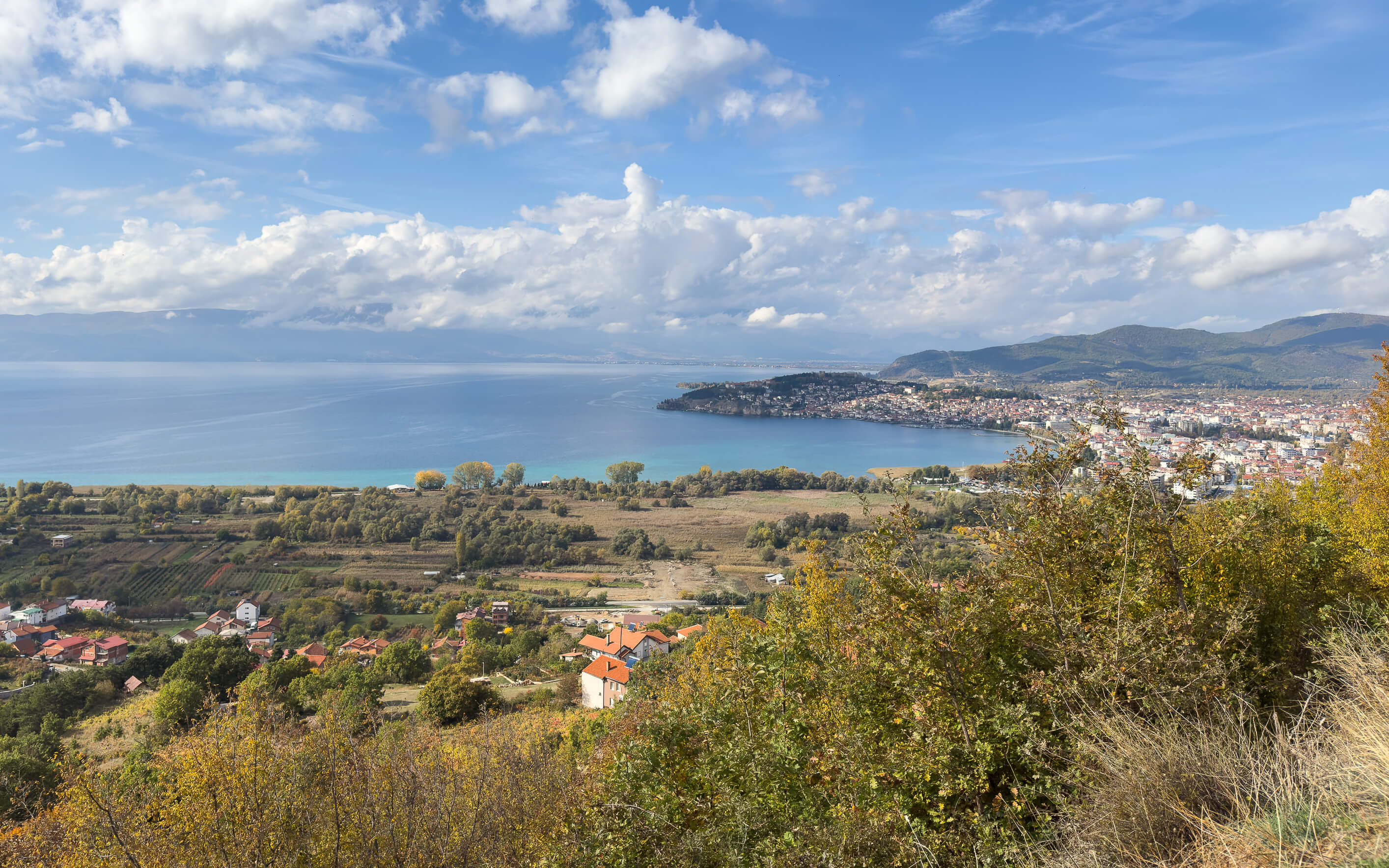
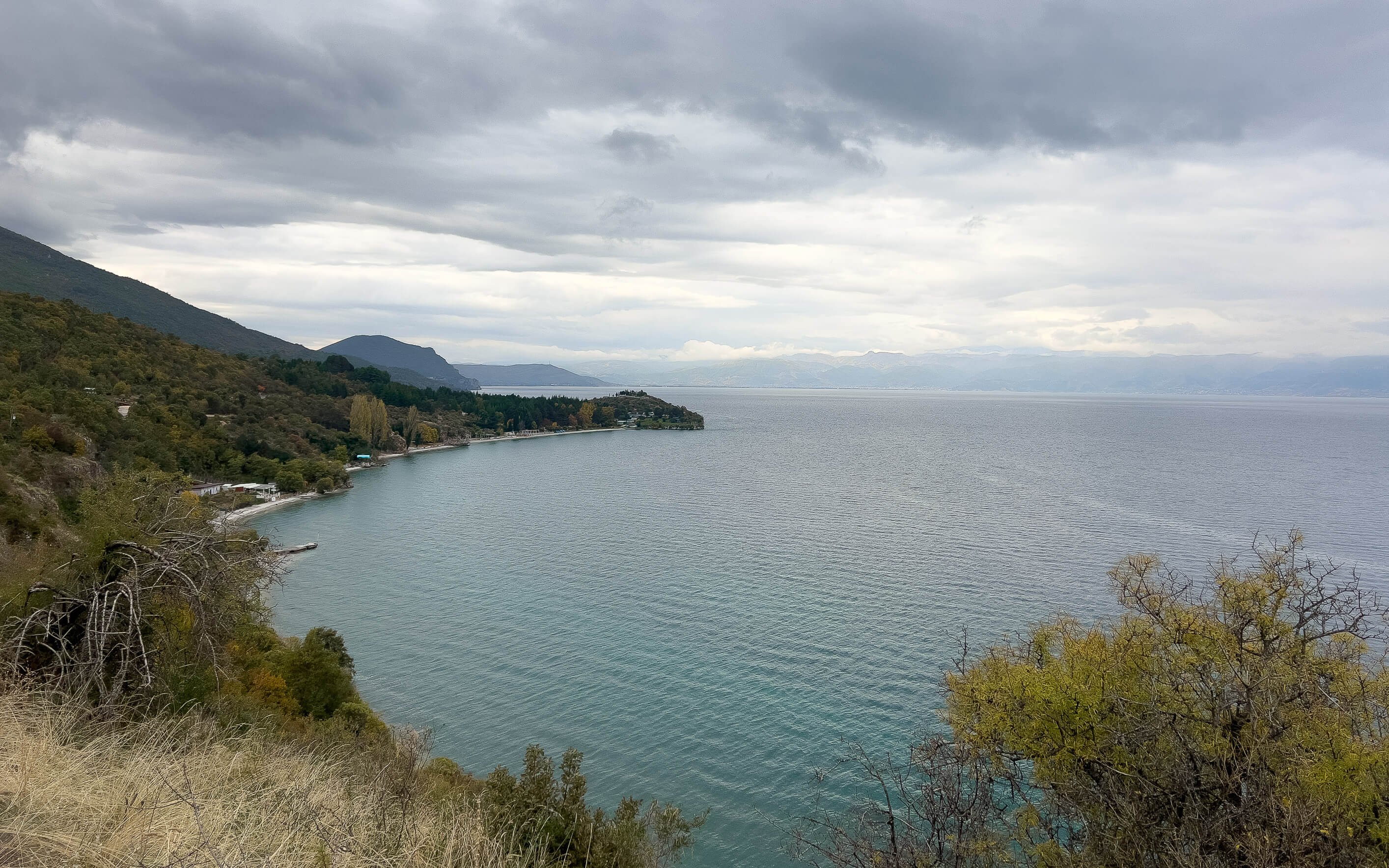
Ohrid is the largest city on the lake of the same name in the south of North Macedonia and is considered one of the country’s most beautiful destinations.
In summer, the lakeside town becomes a true hotspot.
Many travellers from North Macedonia and neighbouring countries come here because the crystal-clear water of Lake Ohrid offers an ideal alternative to the sea.
A visit is worthwhile not only in peak season. Spring and autumn also give the city their own special charm.
It is quieter, the temperatures are mild and perfect for sightseeing, relaxed strolls through town or excursions into nature.
Since the city is only a few kilometres from both the Albanian and Greek borders, it is also a great base for day trips or even full road trips into the neighbouring countries.
In this post, you will learn which places you shouldn’t miss and get valuable tips that will make your stay in Ohrid unforgettable.
SIGHTS IN OHRID
Ohrid is compact and easy to explore on foot.
To keep walking distances short and enjoy the city at your own pace, it is best to choose accommodation right in the centre or at the beginning of the promenade.
Our accommodation turned out to be a great choice. It was ideally located between the old town and the promenade, so we could reach everything within a few minutes.
In the evenings, we enjoyed relaxed walks along the lake or spontaneously stopped at one of the small restaurants.
The private parking area was especially convenient since parking spaces in Ohrid can be limited.
The rooms were modern, well maintained and spacious, which made our stay very comfortable.
THE LAKESIDE PROMENADE
Most visitors make their way to the water first, so we begin with Ohrid’s beautiful lakeside promenade.
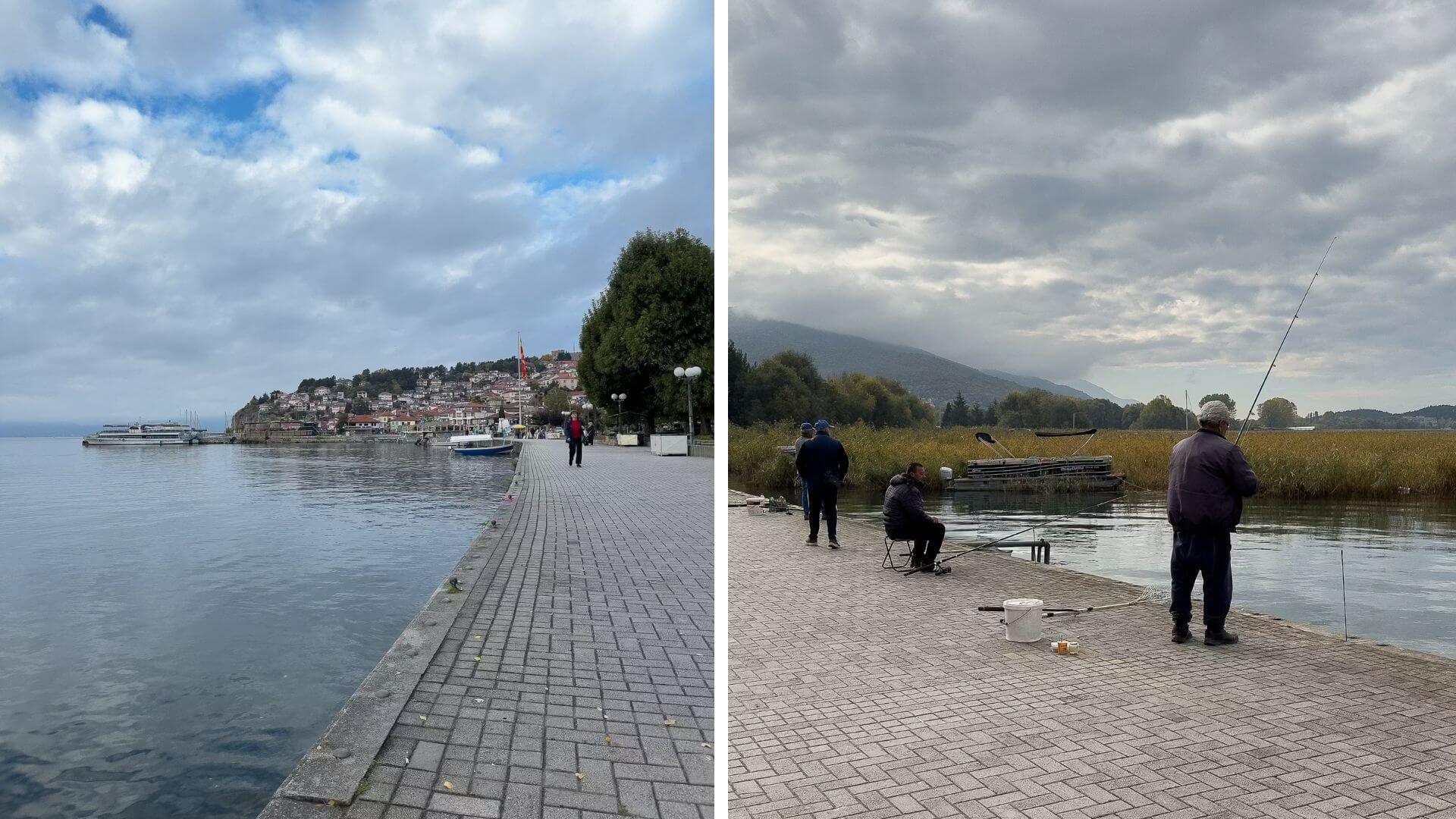
The modern promenade is ideal for a leisurely walk. It starts at the edge of the old town, near the harbour, and continues along the shoreline through the city centre.
On one side, you’ll see the turquoise waters of Lake Ohrid shimmering in the sunlight.
Seagulls, ducks and often even swans glide across the surface, and with a bit of luck you may spot locals fishing along the shore. On the other side, you’ll find plenty of restaurants and hotels.
Benches are placed all along the promenade, inviting you to take a break and enjoy the peaceful views across the lake.
BOAT TRIP ON LAKE OHRID
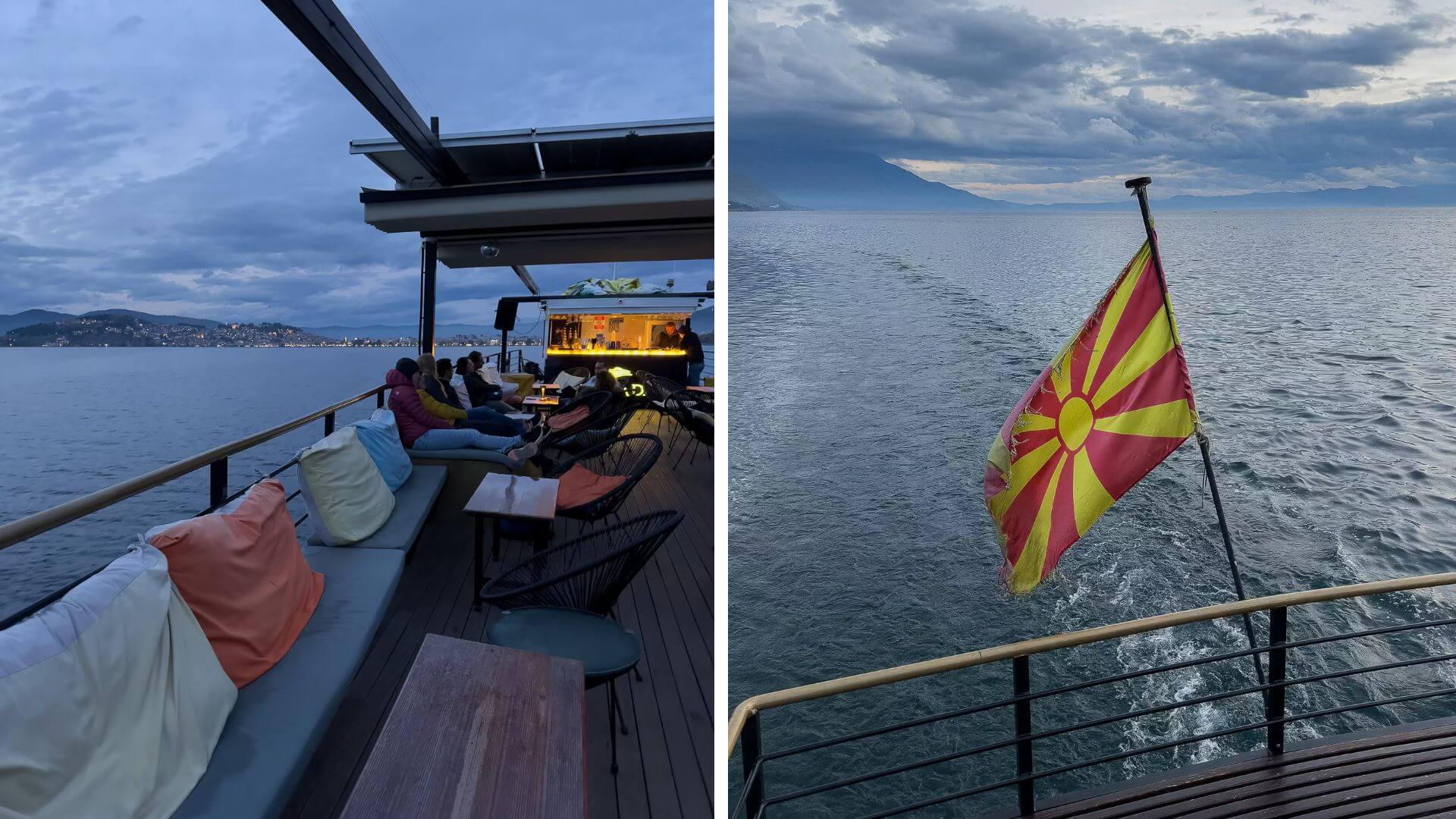
One of the most beautiful ways to experience Lake Ohrid is by taking a boat tour.
You not only get stunning views of the city but also of the surrounding mountain landscape in Albania.
Many tours also take you to well-known sights around the lake. The selection is wide and includes half-day tours, full-day excursions and romantic sunset cruises.
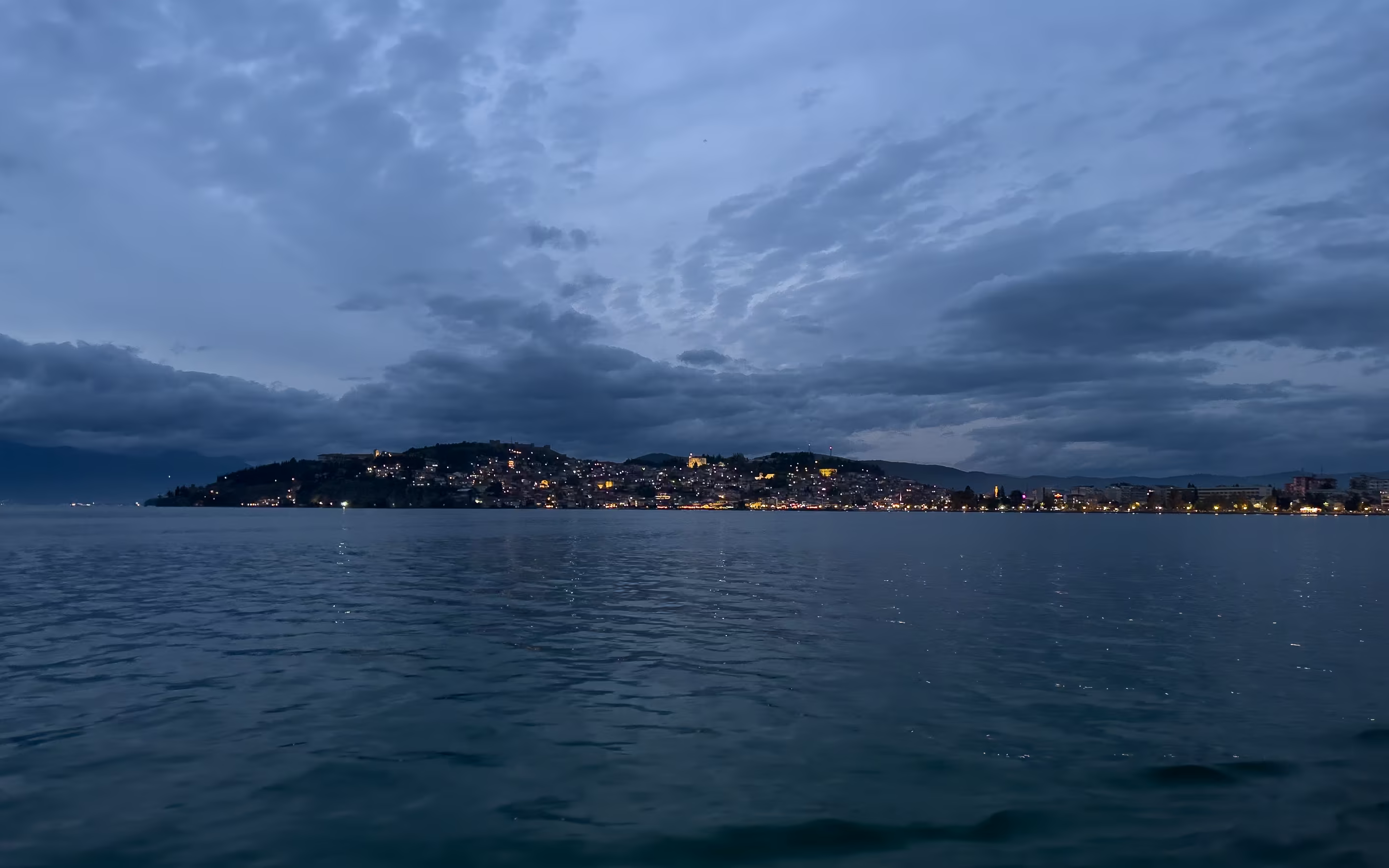
We chose a sunset cruise and would gladly do it again. Shortly before sunset, the boat set off, accompanied by relaxed music and a glass of champagne that was included in the ticket price.
The trip lasted around ninety minutes and first passed the Church of St Jovan Kaneo.
It then continued across the lake towards the Monastery of Sveti Naum while the low sun coloured the sky in warm tones. It was a beautiful way to end an eventful day in Ohrid.
During the summer months, it is worth booking your ticket in advance because the popular boat tours sell out quickly. You can easily reserve your ticket online here: Boat Trip from Ohrid.
VAROS THE OLD TOWN
Once you have experienced the lake up close, it is worth enjoying a view from above.
The best place for this is Samuel’s Fortress, which stands on a hill above the city.
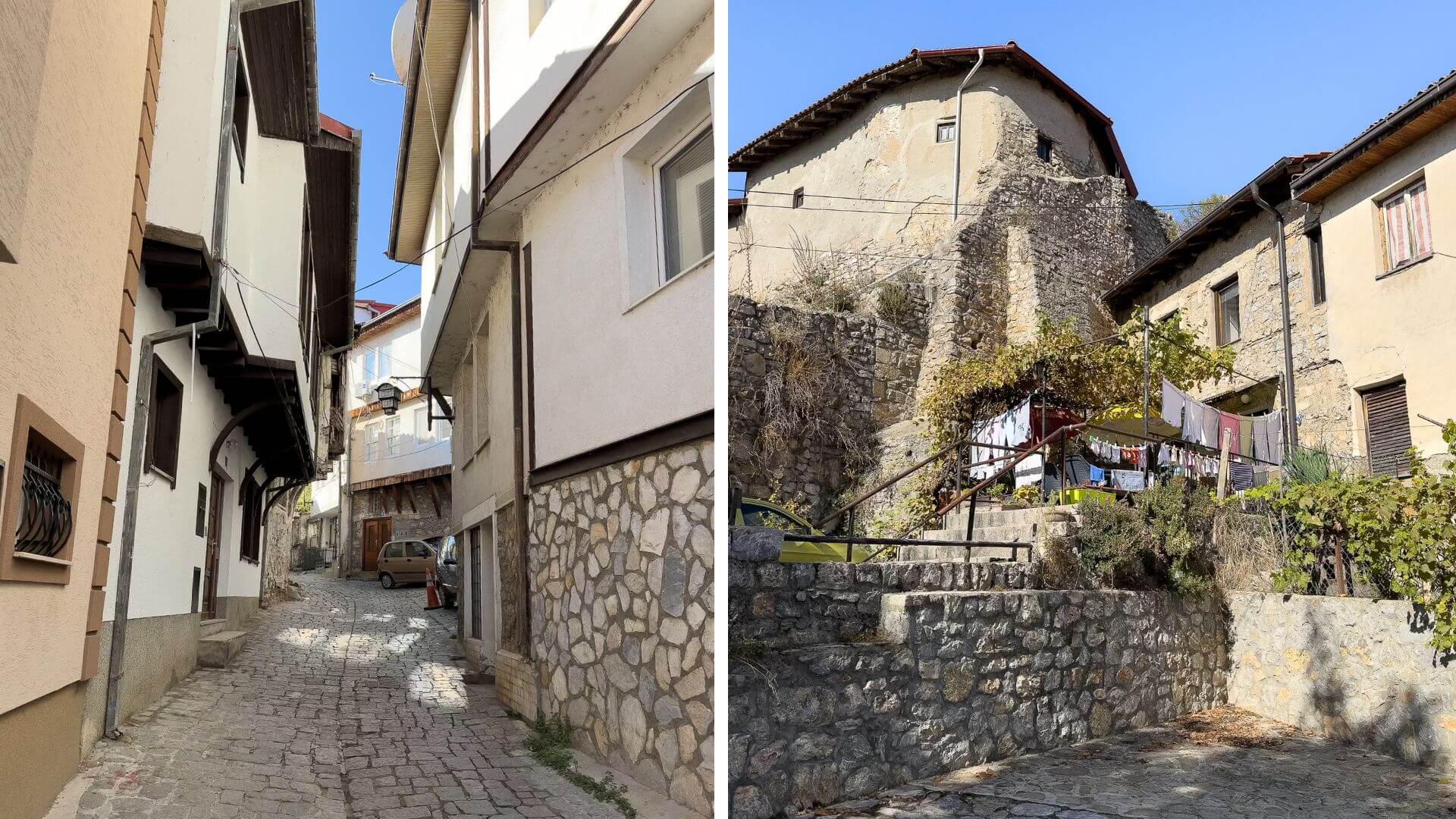
The most beautiful way to get there is by walking through the narrow and winding streets of the old town of Varos.
Since the old town is built on a slope, there are many stairways and most streets are paved with cobblestones.
Keep this in mind when choosing your footwear. In summer, it is best to visit early in the morning or in the late evening because it can get very hot during the day.
Varos now has several hotels and apartments. Many of the traditional houses in Ottoman and Byzantine style, however, are still owned by locals, giving the neighbourhood its authentic character and distinctive charm.
OLD TOWN VIEWPOINT
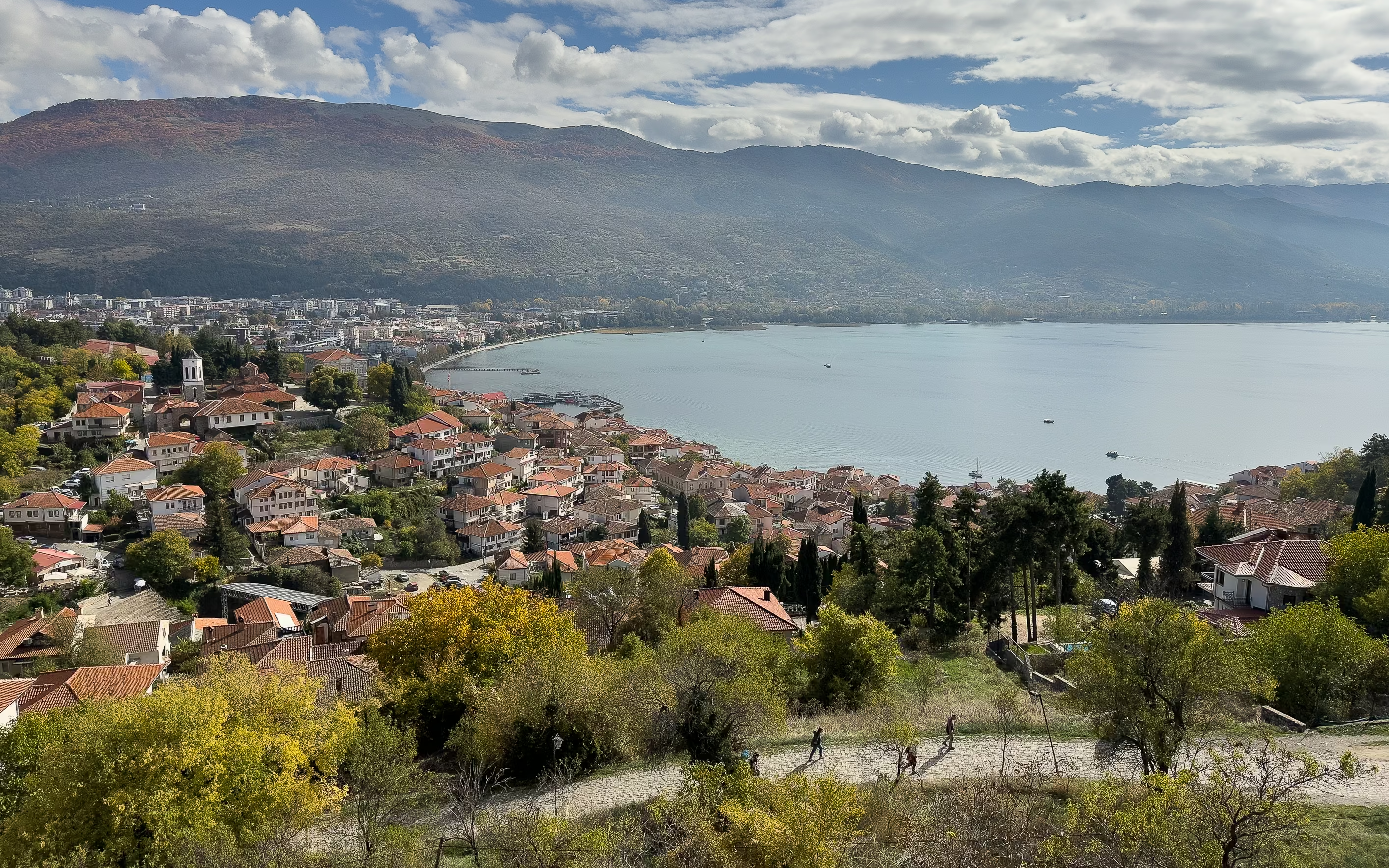
On the way up, you will come across several small but beautiful viewpoints.
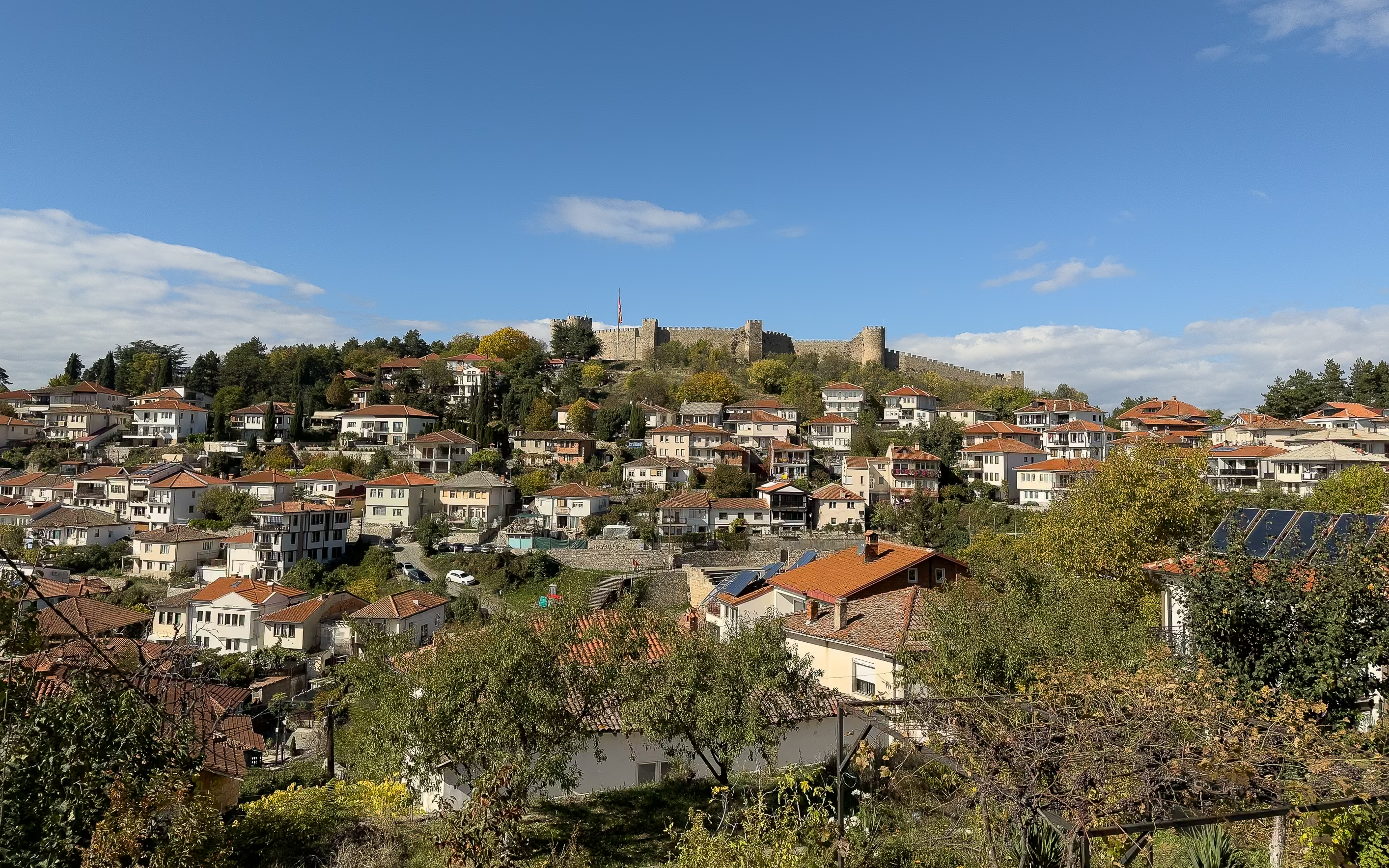
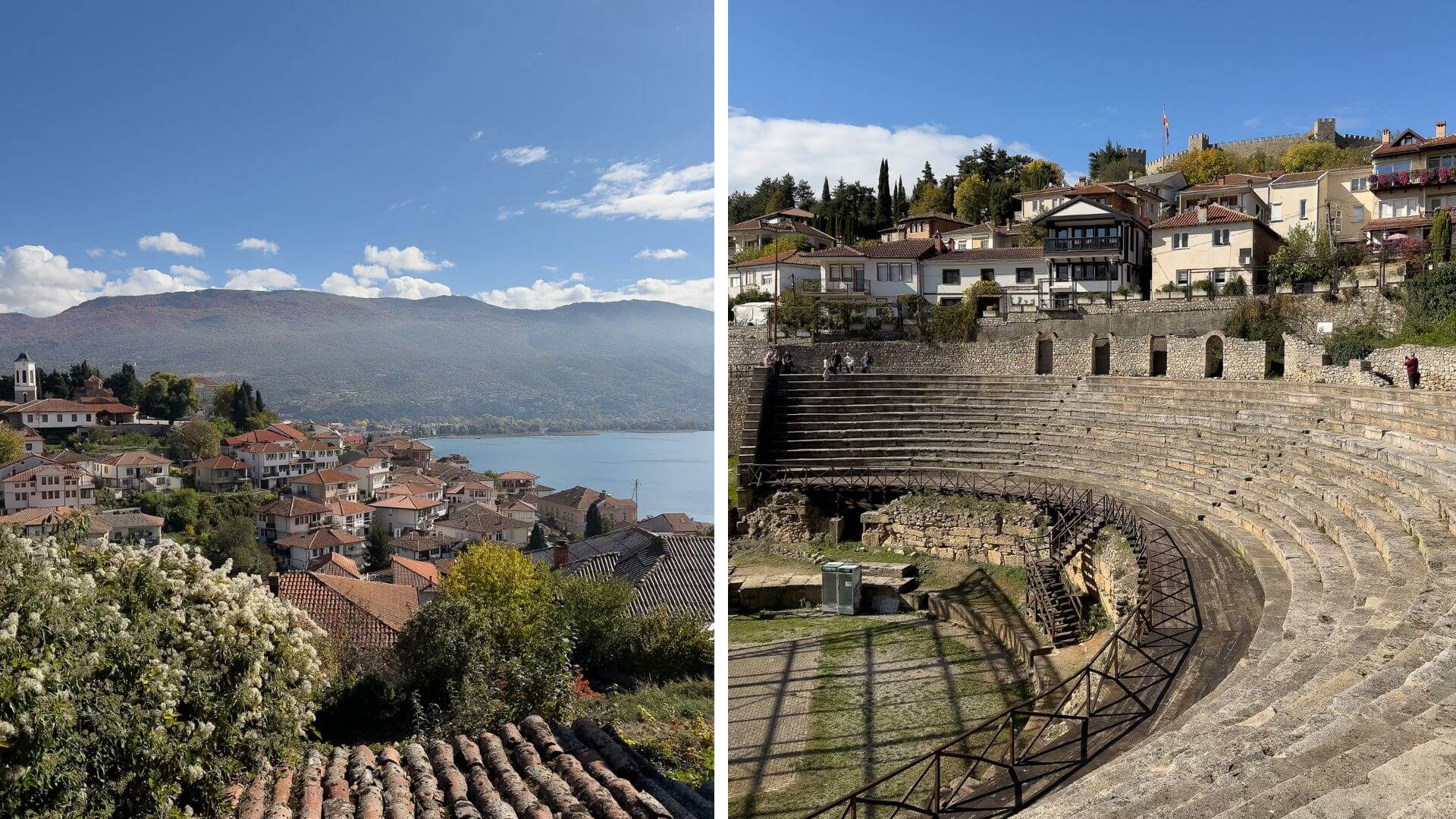
One of the best open views over the rooftops of the city is at the Old Town Viewpoint.
It is already located quite high and gives you a first impression of the panorama that awaits you later at Samuel’s Fortress.
THE AMPHITHEATRE
Just a few minutes’ walk from the Old Town Viewpoint is the city’s amphitheatre.
It is the only preserved ancient theatre in North Macedonia.
In Lychnidos, the ancient predecessor of Ohrid, it served as the cultural centre of the polis from the 3rd to 4th century BC.
Today, the theatre is used for events, especially in summer.
In addition to the impressive backdrop of ancient history, you can also enjoy a lovely view of Lake Ohrid from the seating area.
The theatre can be visited free of charge.
SAMUEL'S FORTRESS
From the amphitheatre, it is only a short walk to the highest point of the city.
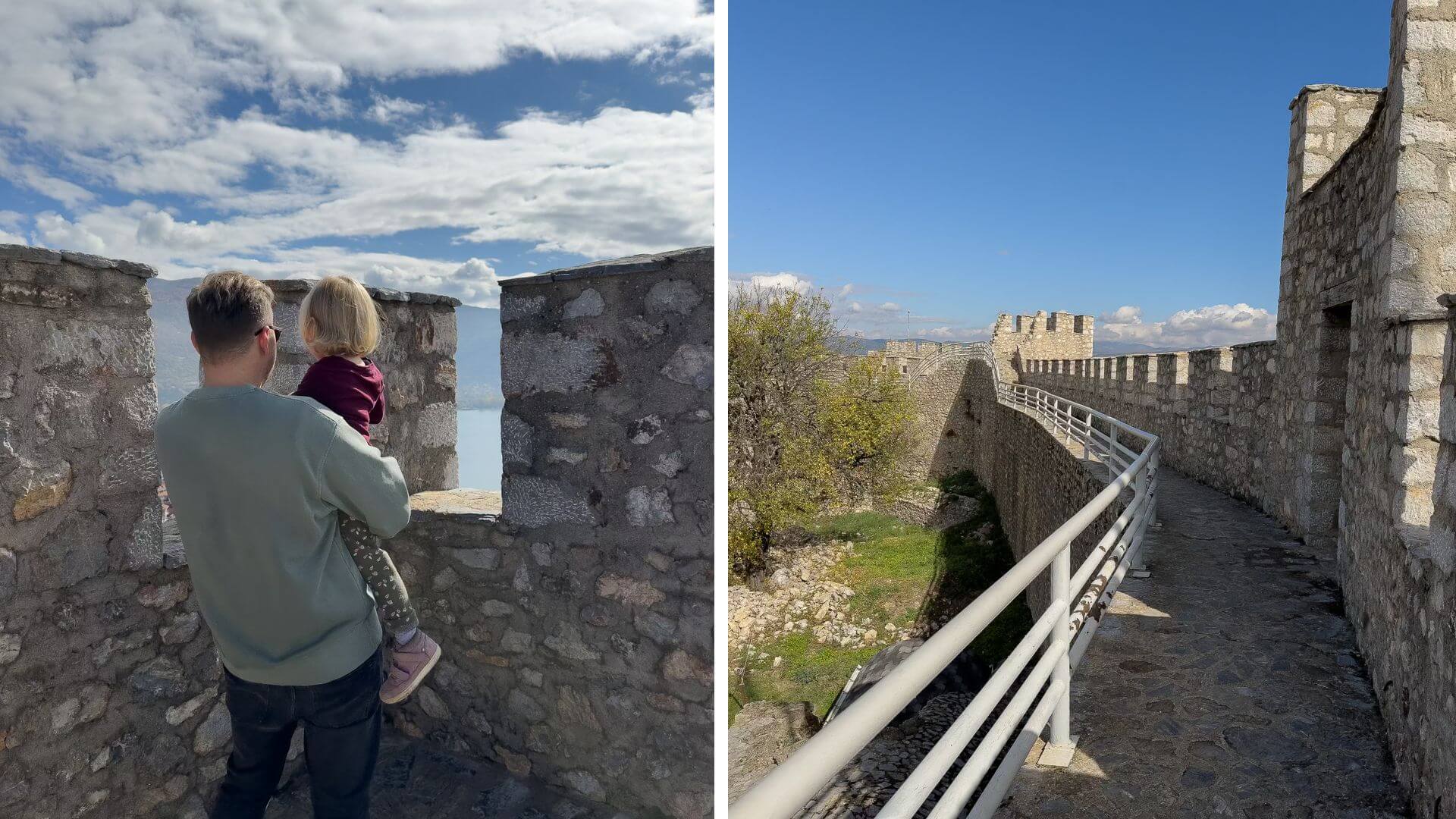
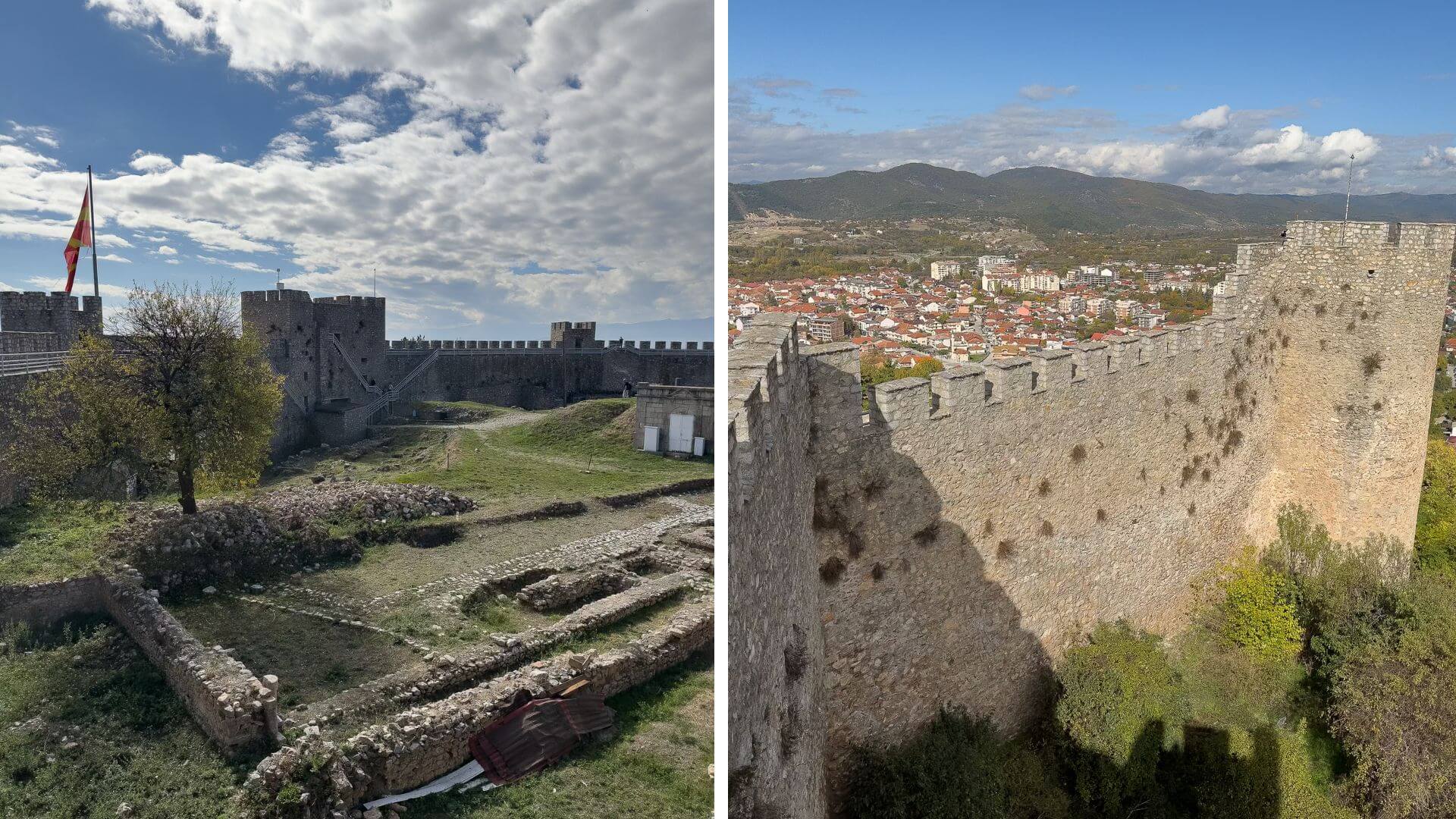
This is where the medieval Samuel’s Fortress is located. From here, Tsar Samuil ruled the Bulgarian-Macedonian Empire from 997 to 1014.
Today, you can walk between restored towers and walls and enjoy a fantastic panoramic view over Ohrid, the lake and the surrounding mountain landscape.
On particularly clear days, the view even extends all the way to Albania.
Current opening hours are displayed only on site. There is a small entrance fee of about two dollars, which must be paid in cash.
KLEMENT CHURCH AND PLAOŠNIK
For your walk back into the city, take the path on the right side of the fortress that leads through a small forest.
It will automatically bring you to the next sight, the Church of Sveti Kliment i Pantelejmon and the archaeological site of Plaošnik.
The Orthodox church, built in Byzantine style, is closely linked to the life and work of Saint Clement.
He was one of the first medieval Bulgarian saints as well as a scholar, writer and educator of the Slavs.
In the 9th century, he came to Ohrid to spread Christianity.
Over the centuries, the church was destroyed and rebuilt several times, which is why different architectural influences can be seen today.
The Plaošnik archaeological site is also located on the church grounds.
Since Ohrid was inhabited almost continuously throughout its history, you can find relics and ruins from the Bronze Age, the Greek and Roman periods and the Middle Ages.
Current opening hours are displayed on site. Entry can also be paid in cash at the entrance.
CHURCH OF ST JOVAN KANEO
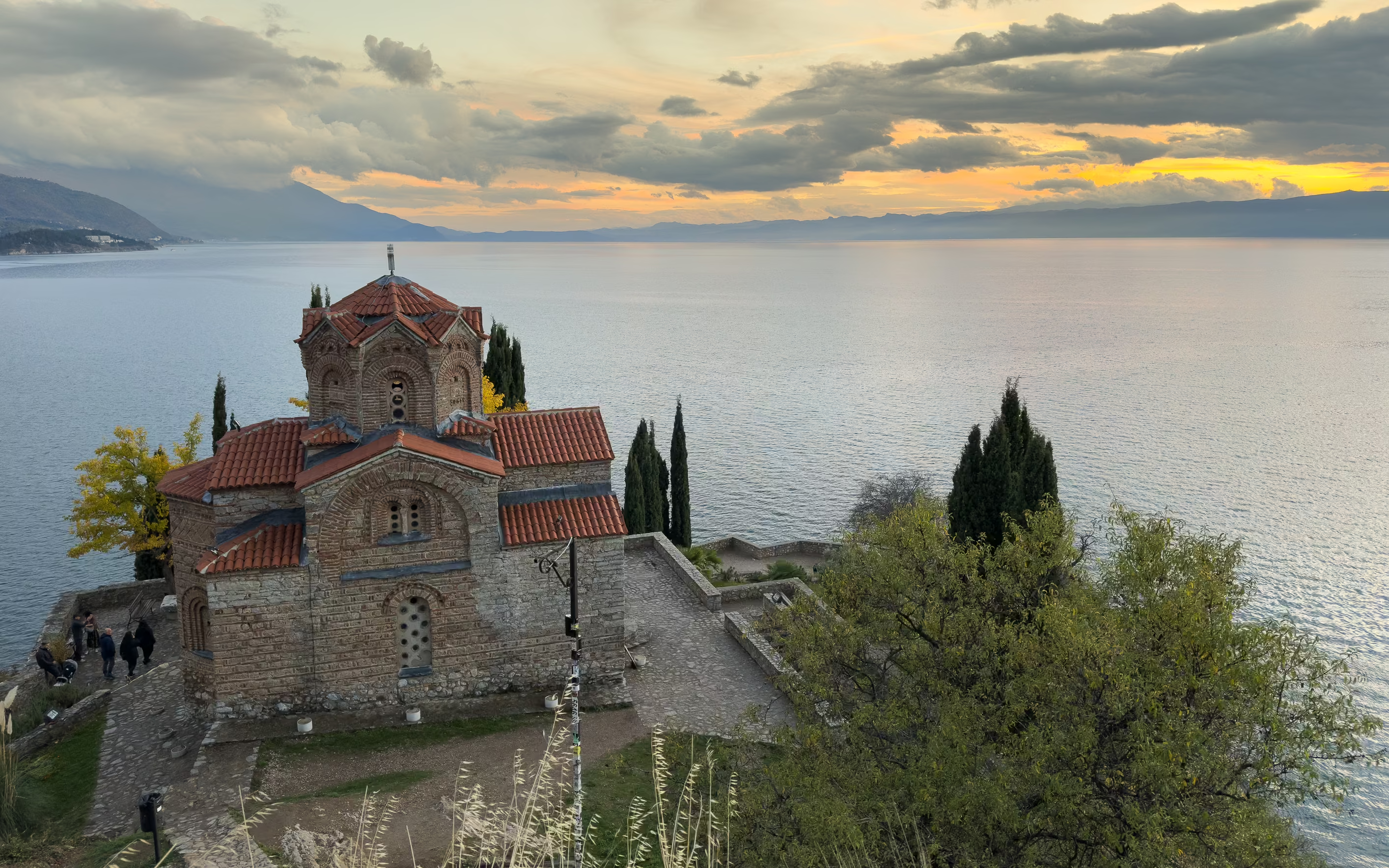
Our next highlight is perhaps the most photographed church in North Macedonia and the symbol of Ohrid.
From Klement Church, a forest path leads down to the Church of St Jovan Kaneo. Along the way, you will already find several beautiful viewpoints and photo spots.
There could hardly have been a better place to build this Orthodox church.
St Jovan Kaneo likely dates back to the late 13th or early 14th century, although the exact construction date and architect remain unknown.
The church was built on a rocky cliff above the former fishing village of Kaneo, which makes its setting particularly impressive and unique.
Below it lies the turquoise Lake Ohrid, to the left stretches the old town and in the distance you can see the mountains of Albania. This stunning scenery attracts many visitors, especially at sunset.
Entry is free and the area around the church is accessible at any time.
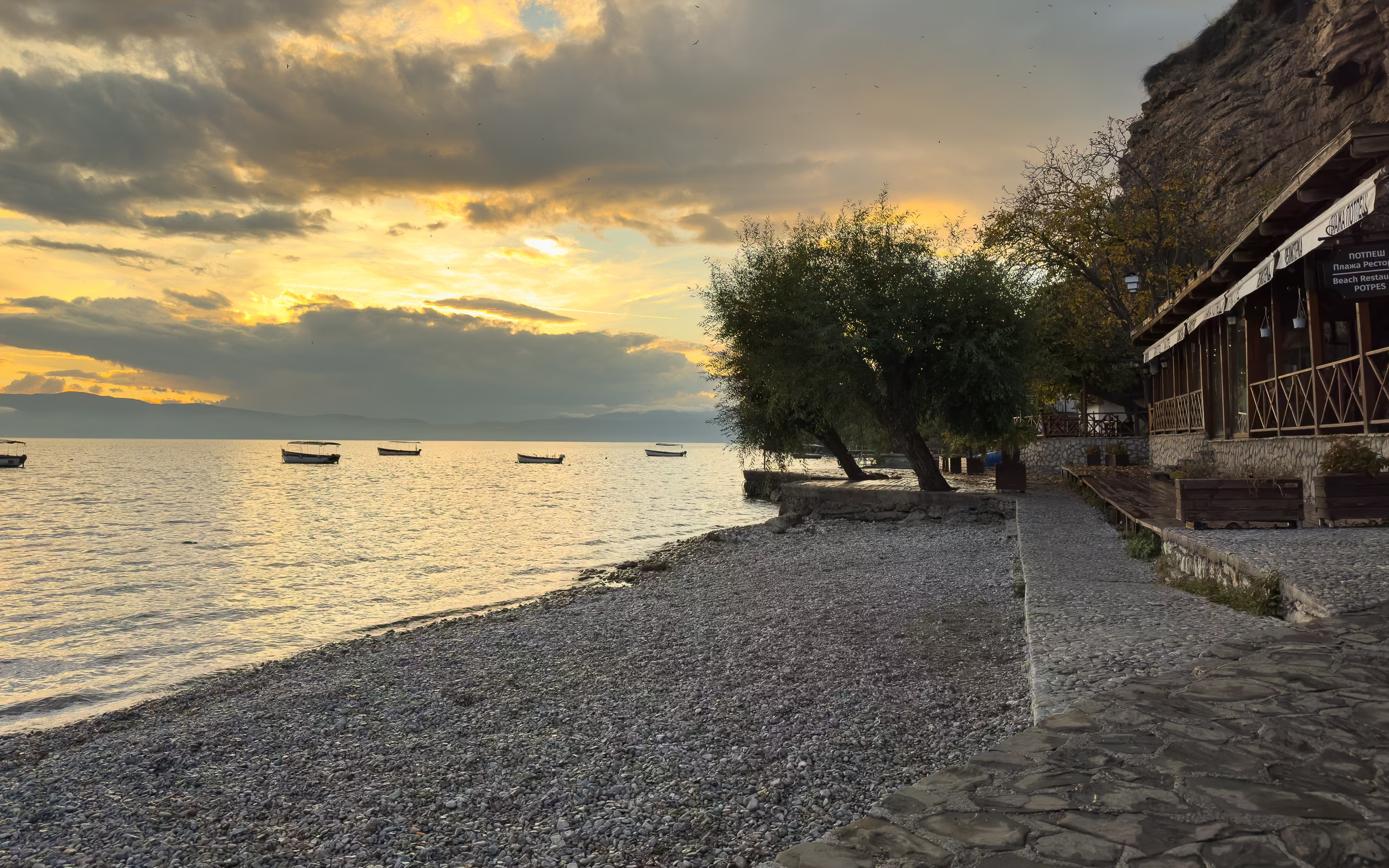
BEACH BARS IN KANEO
One of our favourite places is the small beach area along the former fishing village of Kaneo, located below the Church of St Jovan Kaneo.
In summer, you can enjoy cocktails or a snack at the little beach bars, relax on one of the sun loungers and cool off in Lake Ohrid in between.
During our visit at the end of October, the beach bars were already closed and the loungers had been stored for winter, yet the place still had its own charm.
Simply bring a few snacks and drinks and enjoy the sunset on the shore of Lake Ohrid, away from the crowds.
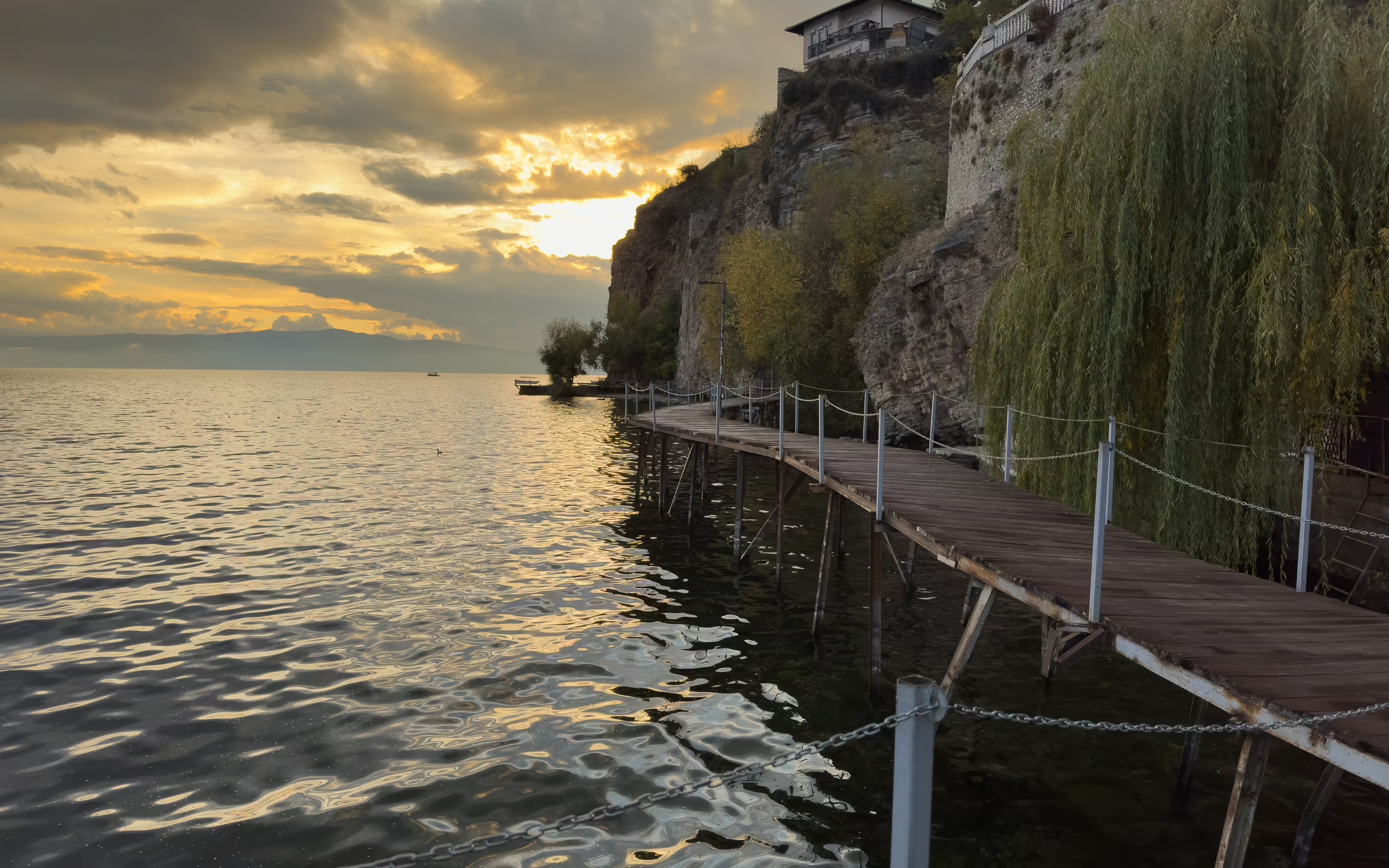
PROMENADE IN OHRID
The only, yet very beautiful way to walk between the beach bars in Kaneo and the city along the water is the promenade of Ohrid.
It is a short wooden walkway built on stilts that leads directly over the lake. The path is pleasant to walk and offers many great photo opportunities with the steep rock face in the background.
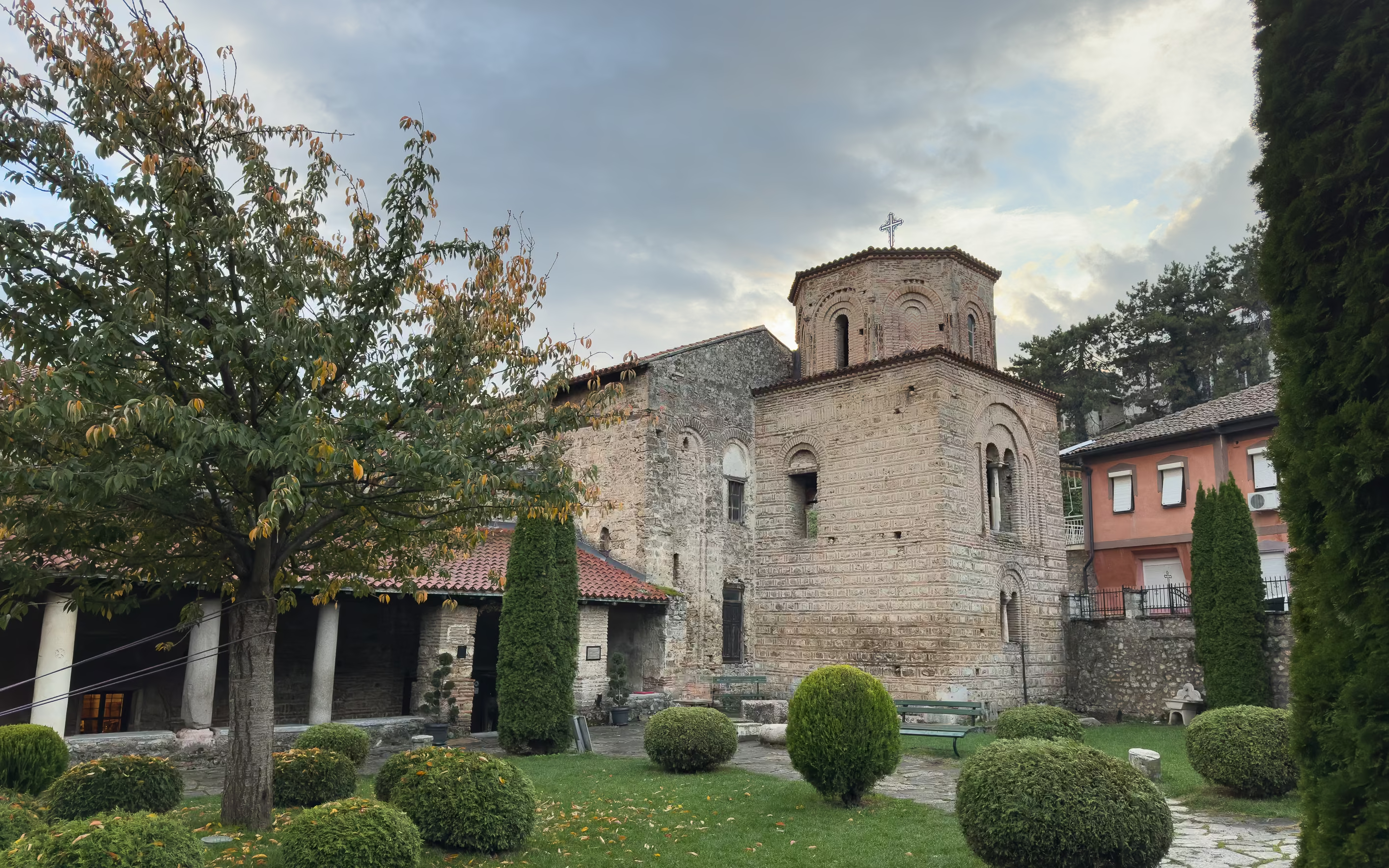
SOPHIA CHURCH
Back in the city, another Orthodox church awaits you: Sophia Church, also called Crkva Sveta Sofija.
This Byzantine-style church was likely built between 1037 and 1057 on the foundations of an older church.
After the region around Ohrid was conquered by the Ottoman Empire between 1385 and 1408, the church was converted into a mosque.
During this period, the bell tower, the central dome and the interior galleries were removed.
After the Russo-Ottoman War of 1878, which marked the end of Ottoman rule in the region, Sophia Church regained its original function as a Christian church.
Entry is free and the current opening hours are displayed on site.
OLD BAZAAR OF OHRID
One place you are unlikely to miss during your stay in Ohrid is the old bazaar.
Once an important trade route, it is now the city’s main pedestrian area.
The lively street is lined with shops offering traditional handicrafts, souvenirs and everyday items such as shoes and clothing.
There are also several restaurants where you can sit down, relax and watch the bustle of the bazaar from a comfortable distance.
RESTAURANT TIP FOR OHRID
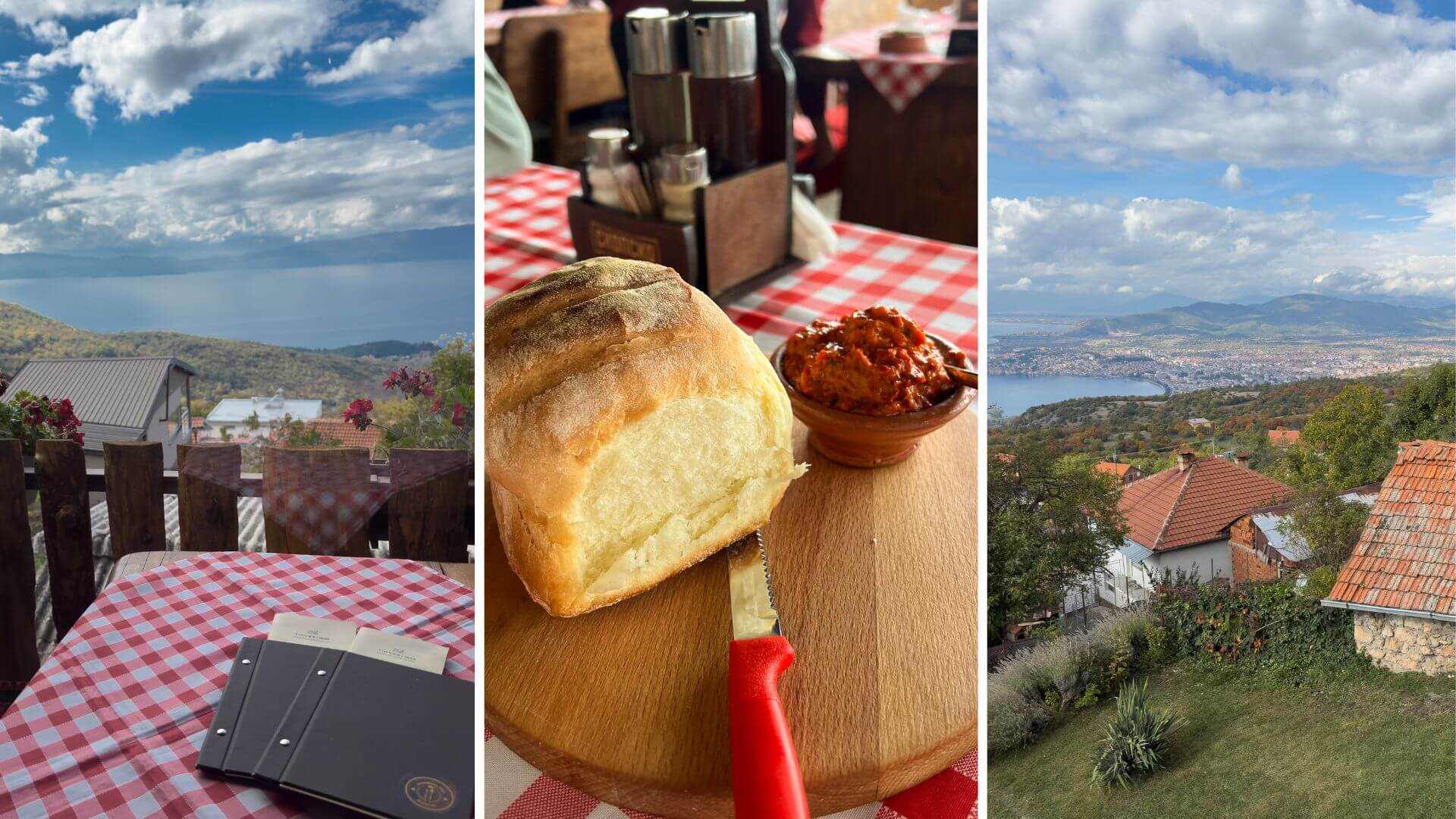
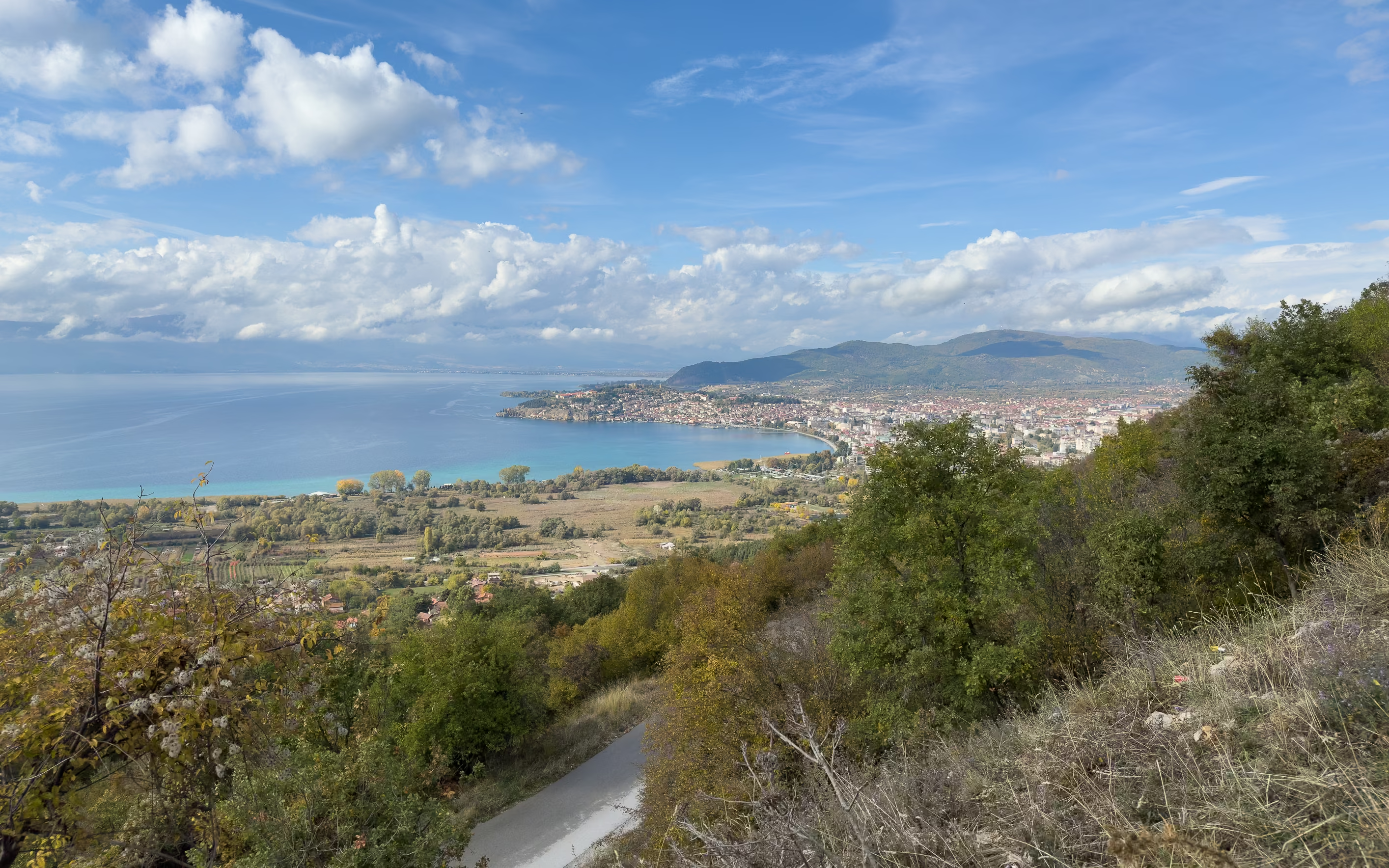
If you want to enjoy local food in a cosy atmosphere with a beautiful view of Lake Ohrid at fair prices, we can highly recommend the restaurant Domakjinska Kukja.
It is located about fifteen minutes outside the city on a hill and can only be reached by car.
We visited it after our half-day trip to Sveti Naum since it is on the same route.
Even without combining it with an excursion, we think the drive there is absolutely worth it.
SIGHTS AROUND OHRID
Since we visited Ohrid as part of our North Macedonia and Kosovo road trip and had rented a car through DiscoverCars, we were able to explore the surrounding area flexibly and on our own.
For this reason, we unfortunately cannot provide tips or information on how to reach the following highlights by public transport.

MONASTERY OF SVETI NAUM
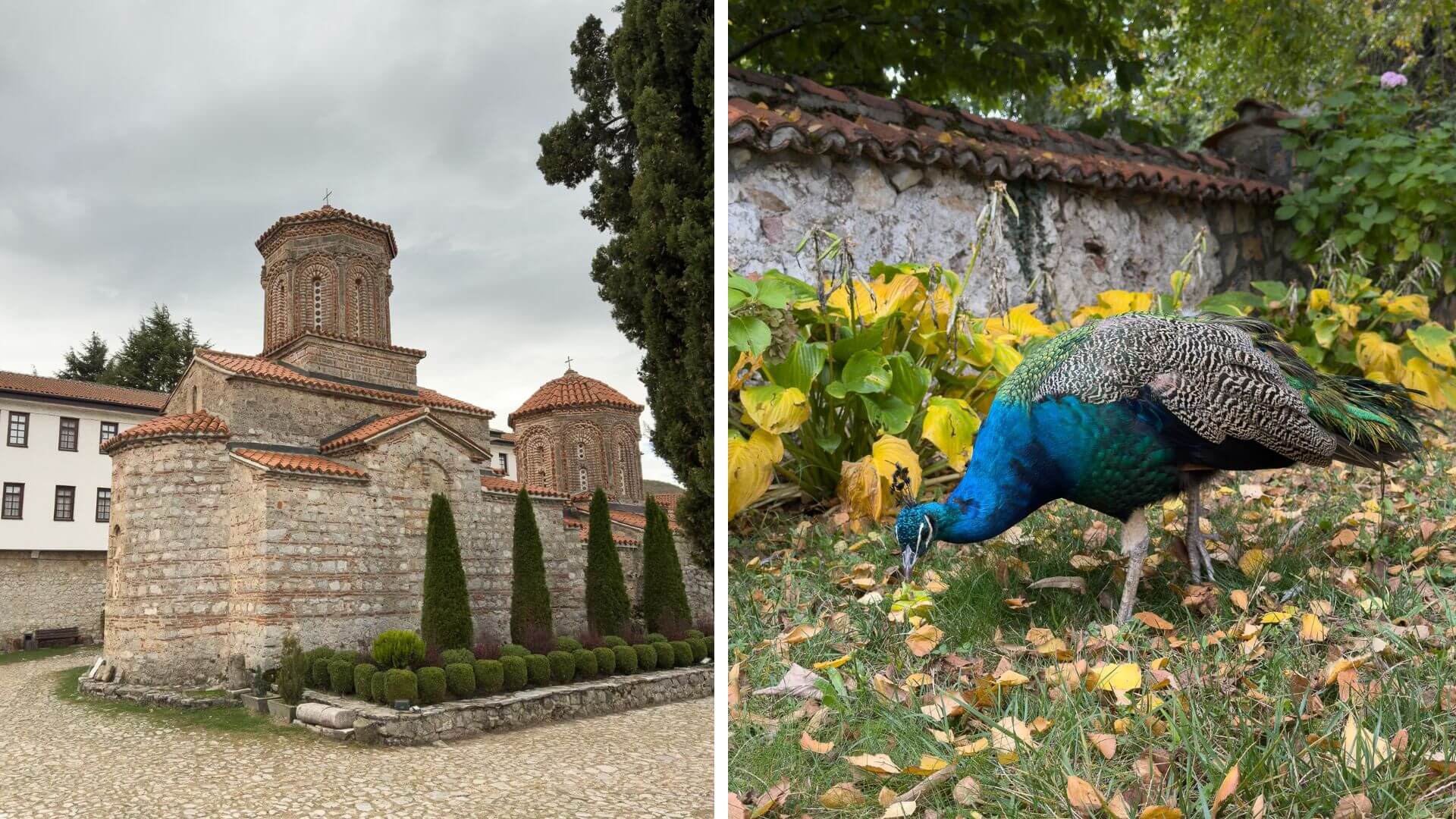
About thirty kilometres from Ohrid, close to the Albanian border, lies one of North Macedonia’s most famous monasteries, Sveti Naum.
Built in 905 on a rocky cliff, the monastery is known for its beautiful interior frescoes and is now part of the UNESCO World Heritage.
For many visitors, the monastery is not the only reason to come here.
The large grounds offer several other highlights, including a wide pebble beach, various restaurants, souvenir stalls and even a few freely roaming peacocks.
You can also take a rowboat tour to the springs of Lake Ohrid, although this tour is relatively expensive at around ten dollars.
Access to the site is free of charge. However, there is a small parking fee on the large car park in front of the complex, which must be paid in cash.

TRPEJCA VILLAGE
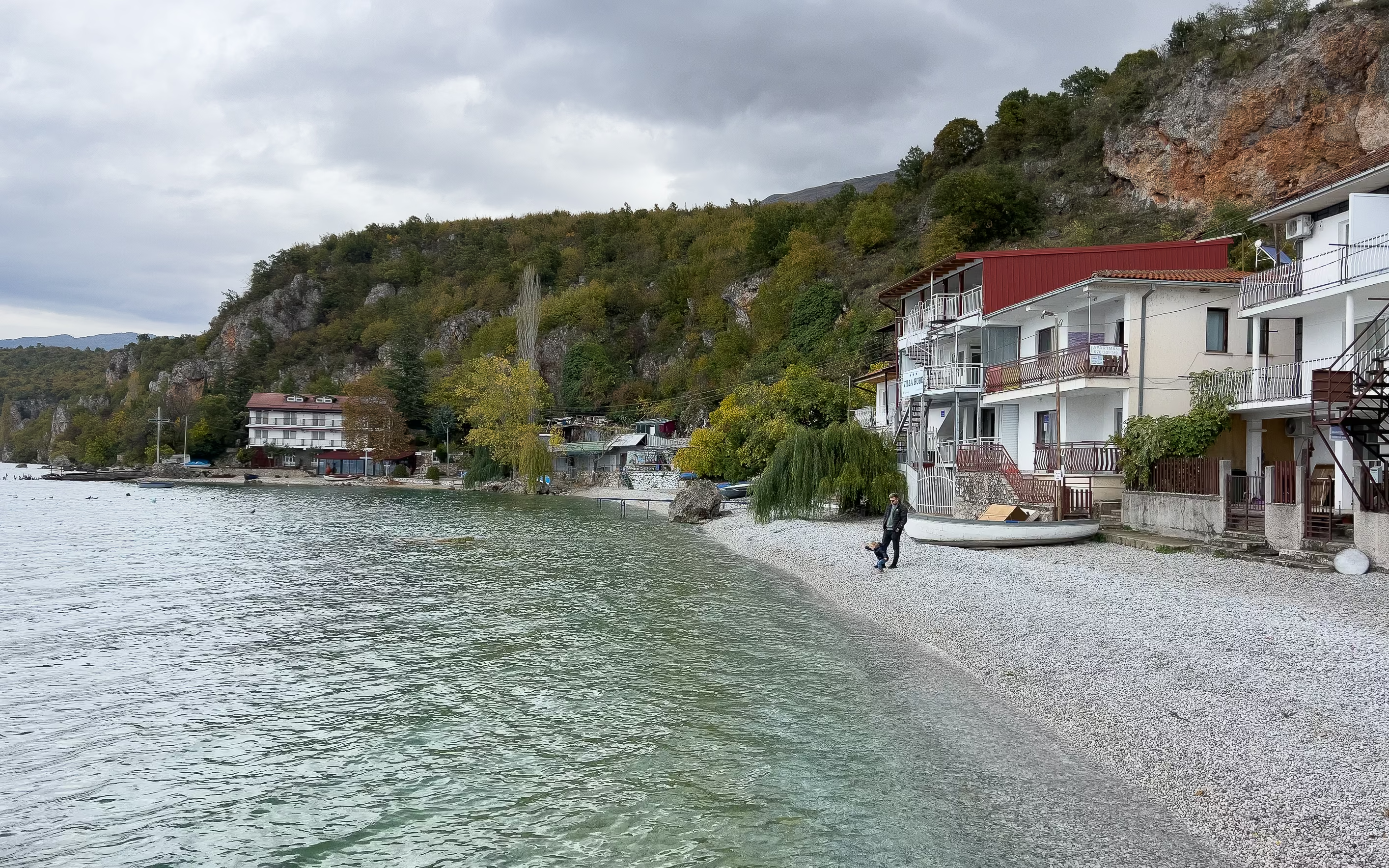
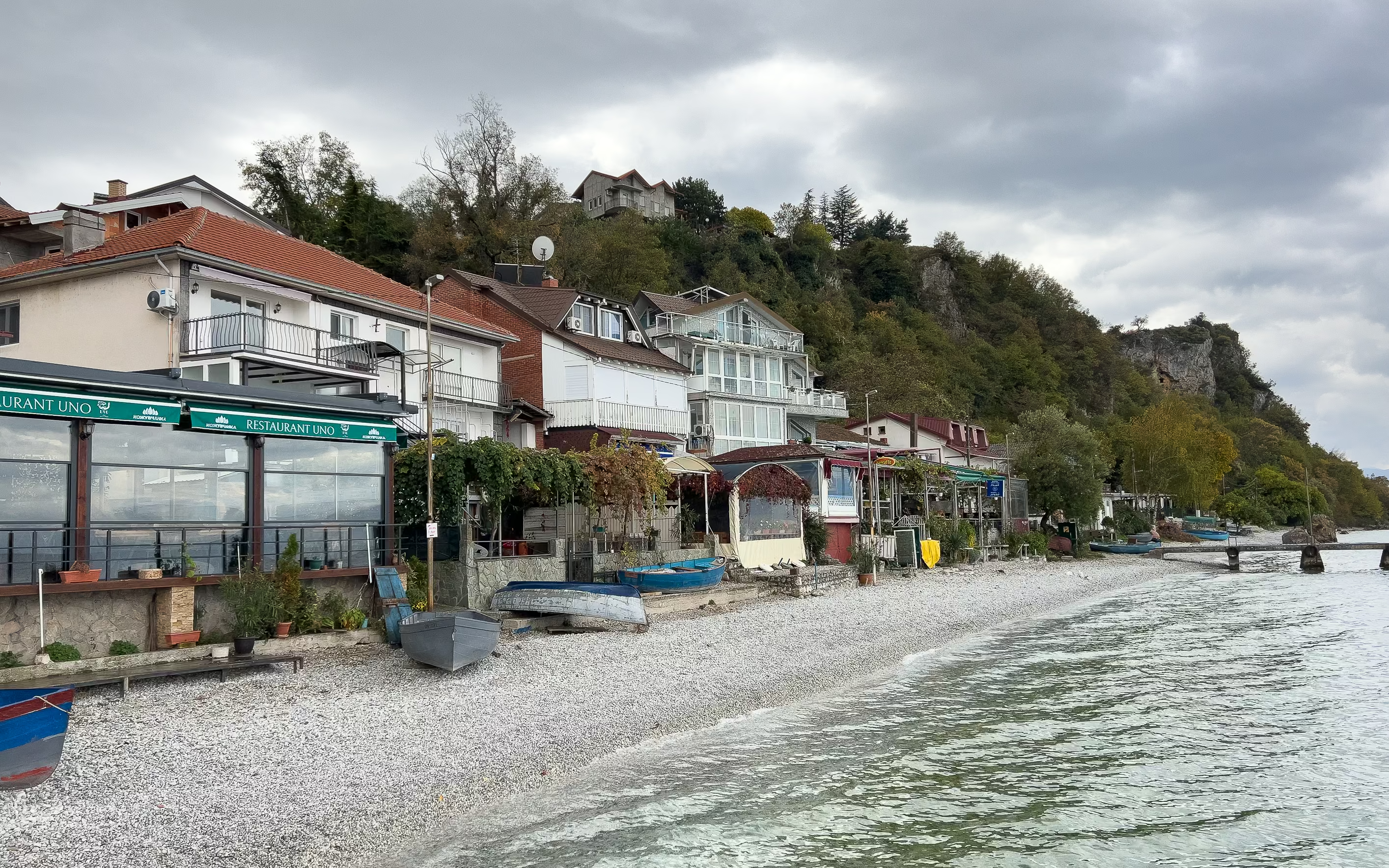
On the way to the Monastery of Sveti Naum, you will also pass the small lakeside village of Trpejca.
The village is built on a slope and feels as if it has only one main road, which leads to a larger parking area.
From there, you can only continue on foot. Numerous stairways take you down through the tightly packed hillside houses to the shore of the lake.
During our visit, the village felt almost deserted. Only a few craftsmen were around, working on repairs in the many apartments for the upcoming season.
We were told that Trpejca is a popular retreat in summer, away from the bustle of Ohrid.
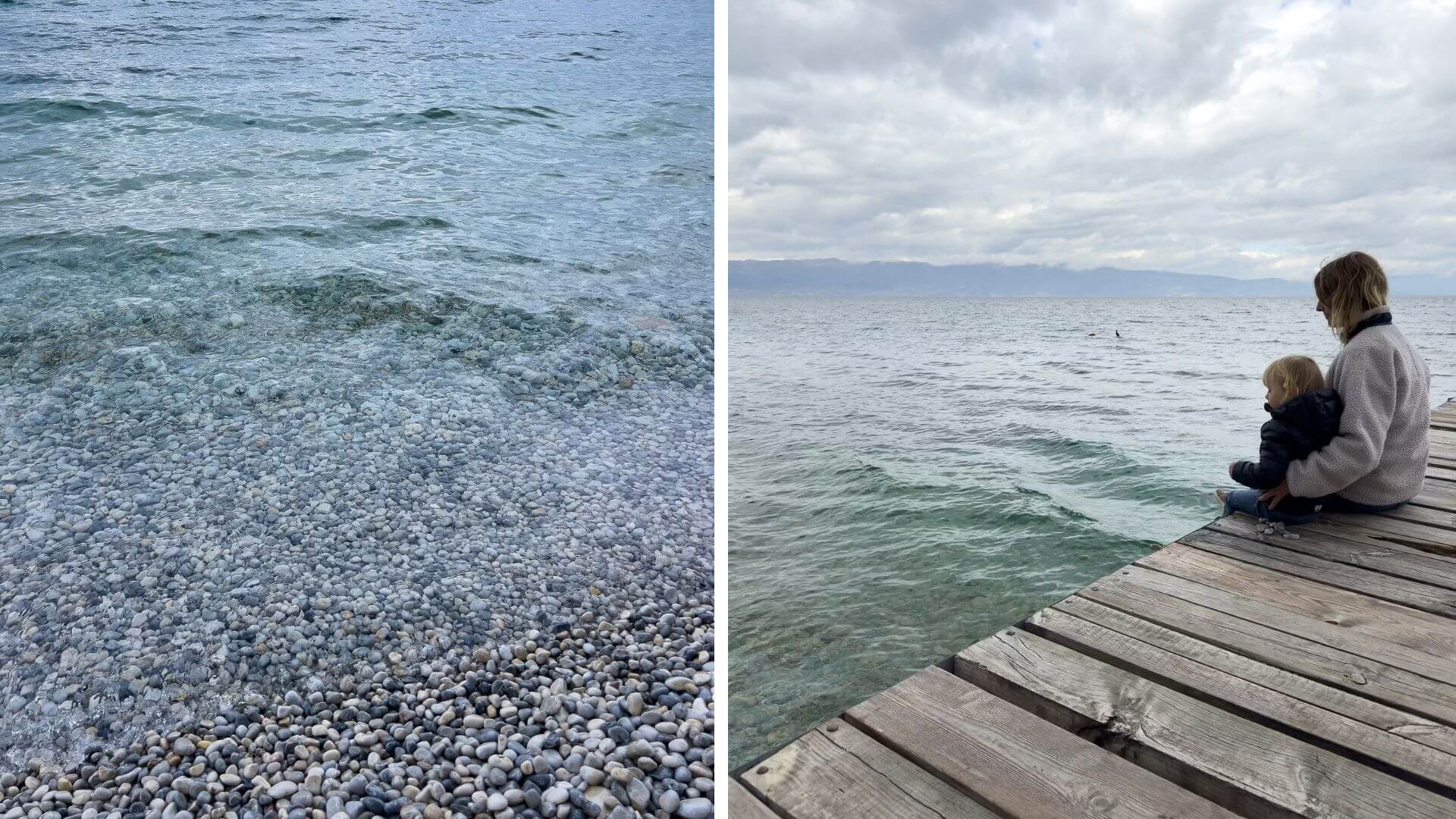
The long pebble beach and crystal-clear water of Lake Ohrid attract many visitors looking for peace and relaxation.
There is a restaurant right by the water that takes care of food and drinks.
There is not much more on offer here, but it is exactly this tranquillity that makes the small village so special for many travellers.
BAY OF BONES MUSEUM
The Bay of Bones Museum, also known as the Museum on the Water, is a reconstructed prehistoric pile-dwelling settlement from the Stone Age.
The site gives you an impression of how people lived here thousands of years ago.
Inside the huts, you can see simple tools, everyday objects and small reconstructed scenes that bring the past to life.
Around the museum, divers have the opportunity to explore the remains of the original settlement, which now lies on the bottom of the lake.
There you can see original finds such as wooden stakes, pieces of pottery and parts of early construction structures.
Further information on opening hours and entrance fees can be found on the official website.
GALIČICA NATIONAL PARK
If you enjoy hiking, a visit to Galičica National Park is the perfect choice.
The park is located about forty-five minutes from Ohrid, nestled between Lake Ohrid and Lake Prespa.
This unique position gives you fantastic views of both lakes along many of the trails.
The highest peak in the park is Magaro at 2,255 metres. The hike is demanding, but the panoramic views at the top are well worth the effort.
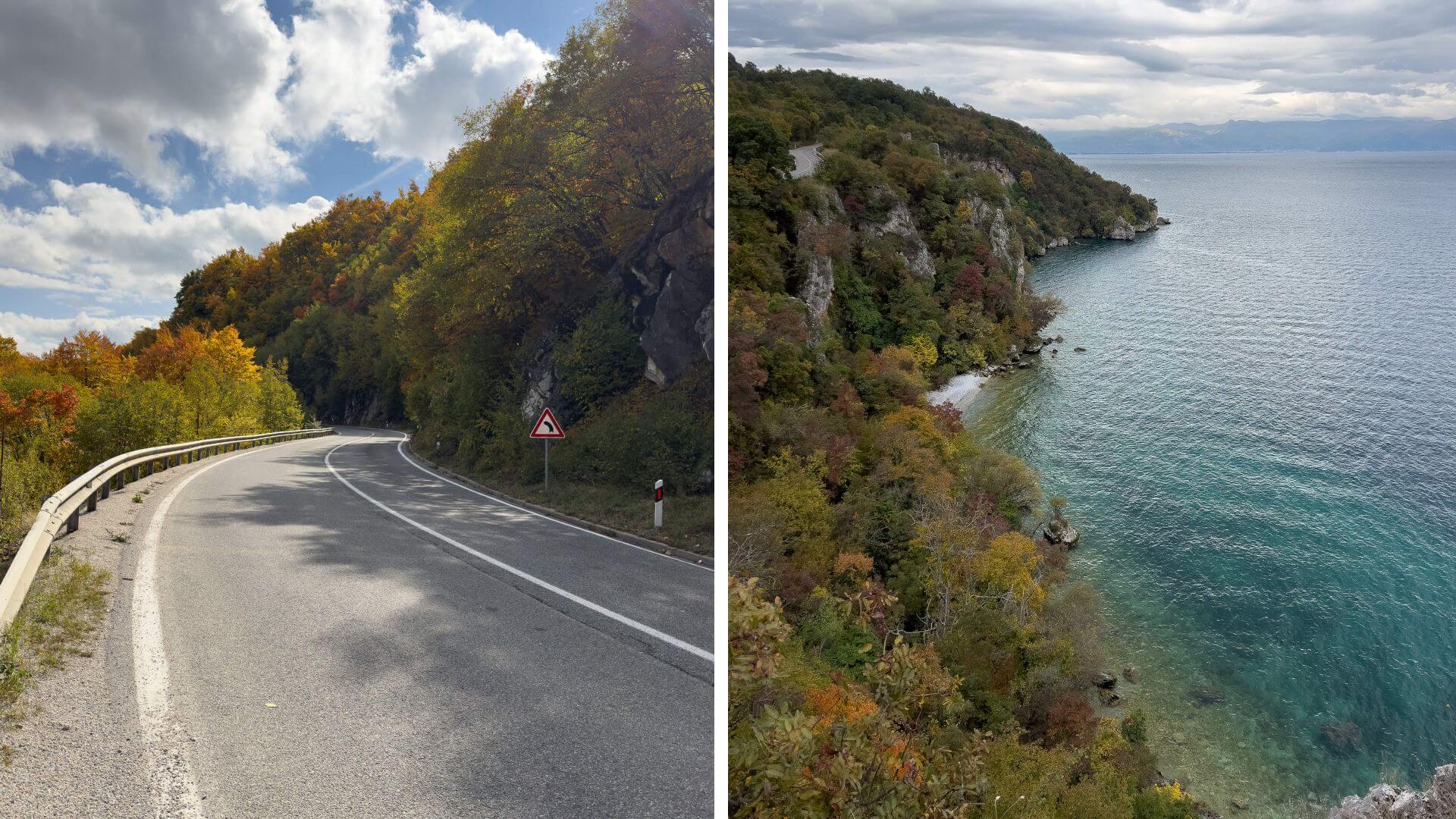
Even if you prefer a less active day, the national park is still an excellent destination. The road that runs through Galičica offers several beautiful viewpoints that you can easily reach by car.
There is a small entrance fee for the park. If you enter by car, an additional vehicle fee is required. Payments can only be made in cash.
If you plan to stop at Lake Prespa, it is worth bringing swimwear. The lake is quieter and far less touristy than Lake Ohrid.
For adventure lovers, there is also the option to visit North Macedonia’s only island, Golem Grad.
This uninhabited island is only about six hundred metres long and three hundred and fifty metres wide and is also known as Snake Island because of the many snake species that live there.
It is a protected area and can only be visited on a guided boat tour. Tickets for the tour can be found here: Boat Tour to Golem Grad.
Lake Prespa is barely developed for tourism and offers a unique and untouched atmosphere.
TRIP TO ALBANIA
Many travellers combine their stay in the relatively small North Macedonia with a trip through Albania.
Which highlights await you in the neighbouring country can be found in our separate post Albania Road Trip.
THIS POST WAS NOT ENOUGH FOR YOU YOU WANT EVEN MORE TIPS INSPIRATION AND SIGHTS FOR YOUR TRIP TO NORTH MACEDONIA THEN MAKE SURE TO CHECK OUT OUR FOLLOWING POSTS:
- Traveling North Macedonia With a Baby and Toddler: Tips & Our Family Experience
- Skopje Travel Guide: What to See and Do in North Macedonia’s Capital
- North Macedonia & Kosovo Road Trip – Route, Tips & Highlights
USEFUL LINKS & RECOMMENDED TRAVEL GUIDES FOR YOU
- Discover the best accommodations
- Find affordable flights at skyscanner.com
- Find affordable rental cars at DiscoverCars
- The best Travel Guides for North Macedonia
- Unique Excursions to Experience in North Macedonia
Note: This blog post contains our personal recommendations in the form of so-called affiliate links. If you book or purchase something through these links, we earn a small commission. There is absolutely no change to the price for you.
Table of contents
Our Travel Destinations


Newsletter
Subscribe to our newsletter
Vielen Dank! Sie haben sich erfolgreich für unsere Updates angemeldet!
Oops! Etwas ist beim Absenden des Formulars schief gelaufen.
If you have any questions or additions to this blog post, feel free to send us a message.
Vielen Dank! Ihre Nachricht wurde erfolgreich gesendet, und wir werden Ihnen bald antworten!
Oops! Etwas ist beim Absenden des Formulars schief gelaufen.