.svg)
.svg)
22.1.2026

.svg)
Beitragsübersicht
.svg)
Travelling to Oman with a baby or toddler may sound like a big adventure at first, and that is exactly what it is, but in a wonderfully relaxed way.
You can expect a touch of One Thousand and One Nights, from sparkling starry skies during a night in the desert to wild camels strolling calmly along the roadside, refreshing wadis, towering sand dunes, beautiful beaches, and the subtle scent of frankincense in the air. These are experiences your family will certainly remember for a long time.
The Sultanate is not only one of the safest and most welcoming travel destinations in the Middle East, but also extremely family and child friendly.
Everywhere you go, children are met with genuine warmth, which makes travelling as a family particularly pleasant.
In addition, medical care meets modern Western standards, which plays a decisive role for many parents when choosing a travel destination.
In this post, we would like to share our personal experiences, offer helpful tips, and show that travelling through Oman with a baby or young child is not only easy to manage, but truly enjoyable.
We also aim to help answer common questions and ease any concerns or worries you may have before planning such a trip.

BEFORE YOUR TRIP
1. VACCINATIONS FOR TRAVELLING TO OMAN
The decision whether to give your baby additional vaccinations is, of course, entirely up to you. No specific vaccinations are required for entry into Oman.
However, it is generally recommended that babies and toddlers have completed their routine childhood vaccinations according to national guidelines.
These usually include protection against measles, polio, tetanus, diphtheria, and whooping cough. In addition, a travel vaccination against hepatitis A is often advised.
It is best to speak with your paediatrician well before your trip to discuss all details and receive personalised medical advice.
2. ROUTINE CHILD HEALTH CHECKS BEFORE YOUR TRIP
When travelling with a baby, it is a good idea to check whether any routine health check ups with your paediatrician are due during your planned travel period.
These regular check ups are important for monitoring your child’s development and should ideally take place within the recommended time frame.
If a routine check up falls during your trip, speak to your paediatrician well in advance.
In many cases, the appointment can either be brought forward slightly or scheduled shortly after your return, depending on what works best for you.
Our tip: in case of a medical emergency abroad, we recommend saving digital copies of your child’s health records and vaccination documents, for example on your smartphone or in the cloud.
This way, you have all important information at hand without having to carry the originals, and medical staff can quickly get an overview if needed.
3. BOOKING THE RIGHT ACCOMMODATION
We believe that when travelling with a baby or toddler, it makes sense to book at least the first few nights in advance, especially during peak travel season.
This helps you avoid the stress of searching for accommodation after arrival and ensures that you find a place that truly suits your needs and budget.
Since becoming parents, we always make sure that our accommodation offers free cancellation.
This gives us flexibility in case our daughter gets ill, we need to slow down, or we decide to stay longer in one place.
In terms of facilities, a balcony or terrace is very important to us, or in the case of apartments, a separate living and dining area.
In addition, we look for a private bathroom, air conditioning, and enough space overall. This allowed us to enjoy relaxed evenings while our daughter was asleep.
Thanks to our baby monitor with camera, we could always keep an eye on her and were with her quickly if she woke up.
We also place great importance on choosing accommodation in a central location, close to planned activities or sights.
This helps avoid long journeys and makes travelling with a small child much more comfortable.
During our trips, we usually alternate between hotels and apartments.
This gives us the chance to cater for ourselves from time to time or do laundry, which is especially practical on longer trips with a toddler.
We almost always book through booking.com because it offers a wide selection of accommodation and very useful filter options.
Here is a small selection of the most comfortable and enjoyable places we stayed during our road trip through Oman:
- Authentic Desert Camp – Al Wasil Desert
- Private Studio in Laguna Gardens Hawana Marlyn Parady GV-05 – Salalah
- Fraser Suites Muscat - Muscat
- Aldar Inn – Nizwa
- The summit house – Jebel Shams
- Sama Hotel - Jabal Al Akhdar
- Sur Grand Hotel – Sur
- Duqm Express Hotel - Duqm
- Kyan_Caravan - Fins
Good to know: when searching for and booking accommodation, we always listed only two adults, as our daughter, even at the age of two, still happily shared the bed with us.
In many places, children up to two years old stay free of charge, and often even up to the age of three, as long as no extra bed is required.
DURING YOUR TRIP
1. LONG HAUL FLIGHTS WITH A BABY OR TODDLER
Before our first long haul flight with a baby, we had so many thoughts and concerns.
Would she manage the pressure changes well, which by the way works very well with a dummy or something to drink.
Would she sleep, and how would we keep her entertained for such a long time in a very confined space, especially since she was already crawling at that point.
We also worried about how our seat neighbours might react if she cried frequently or for longer periods. In the end, it turned out that everything was far less dramatic than we had imagined.
Now, in the toddler stage and after having taken several flights and gained experience, we usually start much more relaxed.
In principle, not much has changed compared to flying with a baby, except that she now has her own seat.
Our tip: stay calm. Your own mood often transfers unconsciously directly to your child.
If you remain relaxed, your child usually will too. Try not to see the flight as a stressful obstacle, but rather as the first part of your travel adventure.
Up to the age of one and a half, we did not book a separate seat for our daughter on either long haul or short haul flights.
She always sat on our lap. During take off and landing, she was secured with a loop belt provided by the airline, an additional belt that attaches to the parent’s seatbelt.
For us, this was completely sufficient.
Many families still choose to book an extra seat in order to have more space or to use a baby carrier or child seat.
From the second birthday onwards, a separate seat is mandatory, and your child must be strapped in like an adult.
Many airlines also allow the use of a certified baby carrier or child seat on board for children under two if you book a separate seat.
We have never done this ourselves, as we found bringing a child seat on board too bulky and impractical.
Good to know: most airlines allow two pieces of bulky luggage per child free of charge, for example a buggy and a car seat, a pushchair with baby carrier and a car seat, a baby carrier with ISOFIX base, or even a combination including a compact travel cot.
It is best to check directly with your airline in advance regarding the exact conditions and permitted combinations.
Important: regardless of which bulky items you plan to bring, you must register them at the airport counter before the flight, even if you have already checked in online and drop off your other luggage at a self service machine.
When it comes to toys, we do not want to give specific recommendations, as every child develops differently and you know best what your child enjoys playing with.
We can only share what we brought along for our daughter and what kept her entertained for at least a while.
At ten months old, she was particularly interested in books with faces, a small doll, especially the face, rattles, spinner toys, colourful stacking cups, some sand toys, and basically anything mum and dad were holding.
Nowadays, stickers, her drawing tablet, books, her doll, and of course the screen on the seat keep her entertained.

When we were travelling with a baby, we carried around 1.5 litres of water for formula and purées on long haul flights, as well as a few baby food jars.
We were checked at security, but once they saw our daughter, they returned the bag to us without further questions.
During the flight, we were repeatedly offered to warm up both the bottle and the baby food jars.
Now that we are travelling with a toddler, we still bring about one litre of water for our daughter and have not had any issues at security so far.
Overall, we found the cabin crew to be extremely considerate and attentive when it comes to the youngest passengers and their needs.
2. MEDICAL CARE IN OMAN
Medical care in Oman largely meets modern Western standards and is a major advantage for families travelling with young children.
The country has many well equipped hospitals, health centres, and private clinics, especially in and around Muscat, Nizwa, and Salalah. Many doctors speak excellent English.
Pharmacies are also widely available in cities and are generally well stocked.
Everyday essentials such as fever reducing medication, mild painkillers, electrolyte solutions, basic first aid supplies, and skin care products are easy to find.
For certain prescription medicines, however, a doctor’s note may be required.
Even so, we recommend bringing a small travel health kit specifically for your child. This might include:
- Fever suppositories or syrup
- Nasal drops
- Electrolyte solution
- Wound or healing ointment
- Thermometer
- Any familiar medication your child tolerates well
This way, you are well prepared for minor issues without needing to visit a pharmacy straight away, and you know exactly how your child reacts to the medication you bring.
Good to know: many medicines can lose their effectiveness in high temperatures.
Always read the information leaflet carefully, especially if you plan to take unused medication back home and continue using it later.
In addition to access to medical treatment, covering the costs of doctor visits and medication is equally important.
Medical expenses abroad are usually not covered by standard domestic health insurance.
If you have a travel credit card with included insurance, such as an American Express card or a Miles and More credit card, make sure to carefully check the terms and conditions of the integrated travel health insurance in advance. We travel with both cards and have been very satisfied with the included insurance coverage, which is why we can genuinely recommend them.
If you have a credit card that includes travel insurance, make sure to check the terms and coverage in advance.
If your card does not include travel medical insurance, trip cancellation, or interruption cover, we strongly recommend taking out a separate private travel insurance policy before your trip.
VisitorsCoverage allows you to choose suitable travel medical insurance quickly and easily. The annual cost is usually low, and in an emergency, comprehensive travel insurance is invaluable.
Our tip: make sure your policy offers full coverage without financial limits and includes medically necessary repatriation in case of serious illness.
It is also important to keep all medical reports and receipts for treatments and medications you have paid for upfront.
Only with proper documentation can you later submit a claim to your insurance provider and receive reimbursement.
3. FOOD AND DRINK FOR BABIES IN OMAN
Parents travelling with a baby often worry about this topic, as luggage space is limited and formula and baby food jars can be heavy.
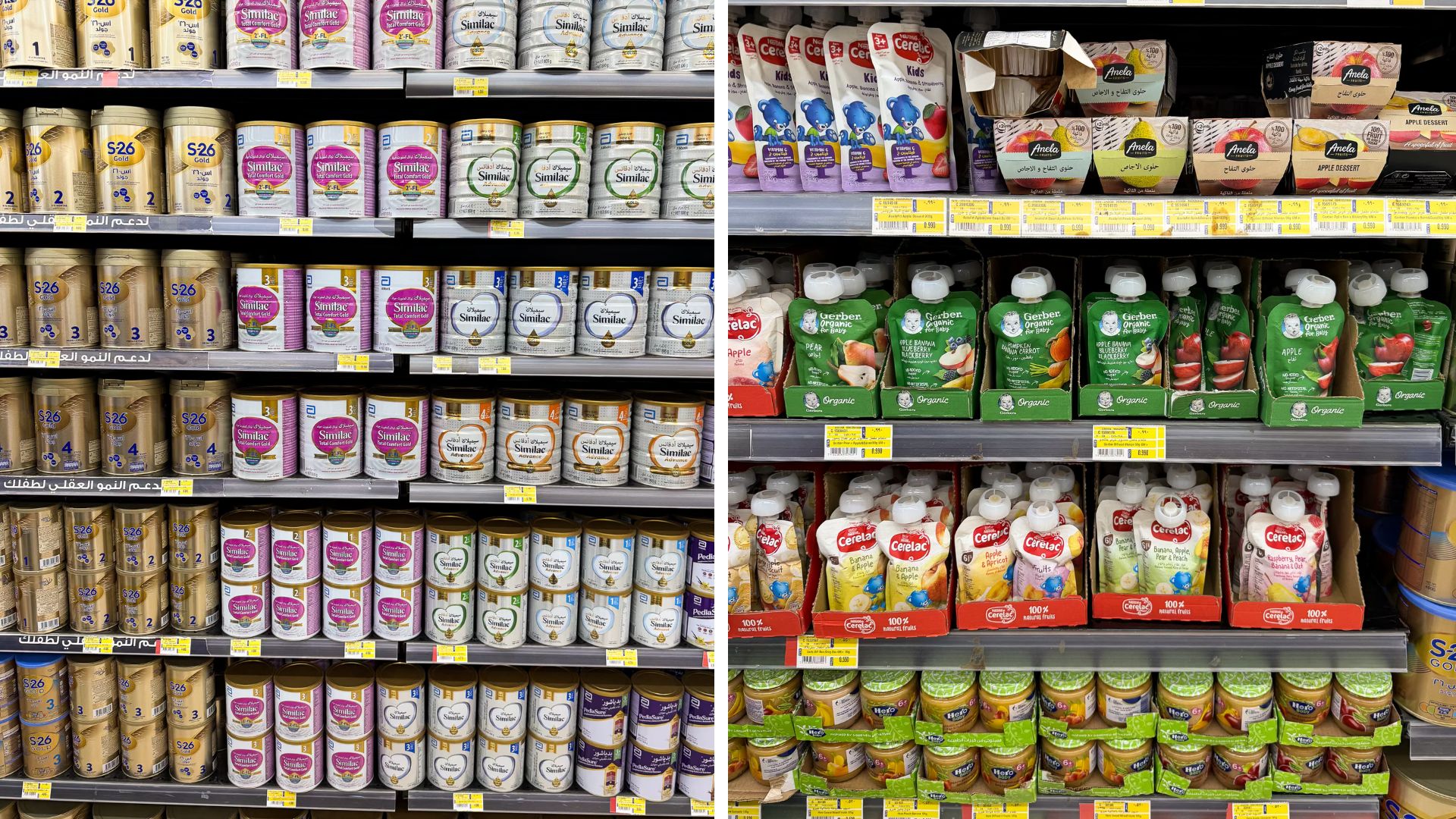
However, we can hopefully ease your concerns here as well. Formula, follow on milk, and baby food are widely available in Oman, as Omani families also use these products for their babies.
In large supermarkets and pharmacies around Muscat, Nizwa, and Salalah, you will find everything your baby needs, including both local brands and well known imported products.
These are usually more expensive than in Europe.
In general, we recommend bringing enough baby food from home for at least the first few days, so your baby can slowly get used to local products.
Keep in mind that your little one may already be dealing with jet lag, high temperatures, and many new impressions, and familiar food can be very comforting during this time.
If you prefer to prepare your baby’s food yourself, supermarkets offer almost all basic ingredients you would also find at home, such as oats, pasta, rice, potatoes, fresh meat, plain natural yoghurt without sugar, plenty of fruit, and much more. For this option, you will need accommodation with a kitchen.
If you prefer eating out in restaurants, there is no need to worry when travelling with a baby or toddler. You can always ask if unseasoned, separately cooked vegetables or a simple side dish can be prepared for your child. As Omanis are very child friendly, this request is usually happily accommodated.
Fresh fruit is always an easy option and is available everywhere.
As a general rule when travelling outside Europe, we follow the principle: boil it, cook it, peel it, or forget it.
We only drank bottled water and never tap water. We did wash our daughter’s drinking bottles with tap water, but regularly rinsed or sterilised them with boiling water to be on the safe side.
4. NAPPIES AND WET WIPES IN OMAN
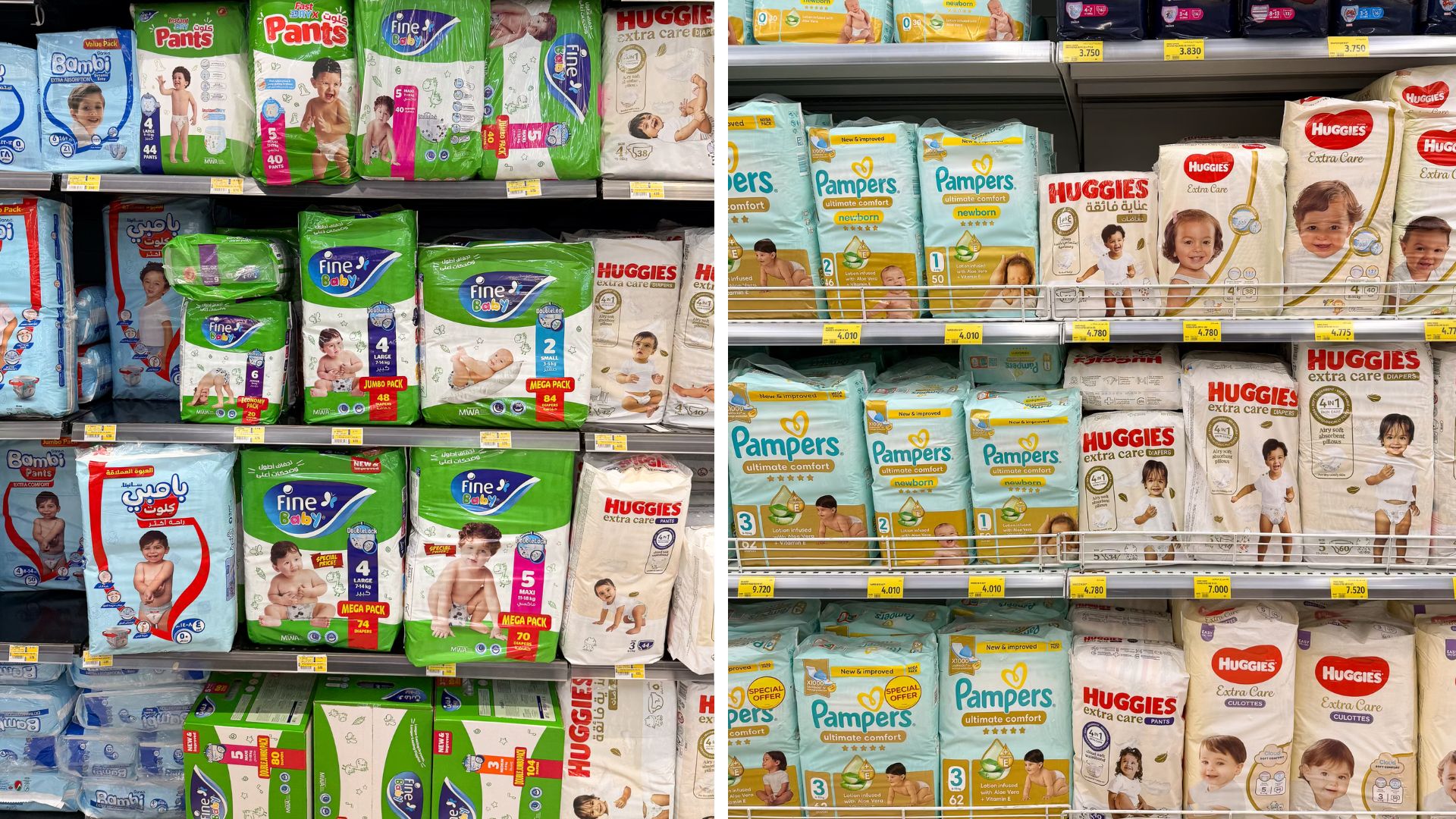
Nappies and wet wipes are widely available in Oman. You can find them in supermarkets, baby shops, and pharmacies, with various pack sizes and brands to choose from.
Prices are slightly higher than in Europe. Both taped nappies and pull up style pants are available.
Swim nappies, however, are rarely available or sometimes not available at all. For this reason, we recommend bringing a reusable swim nappy from home.
Wet wipes are also easy to find. Depending on the brand, they can be more heavily scented than what you may be used to at home.
If your child has sensitive skin or you prefer to avoid strongly perfumed products, it is a good idea to bring a sufficiently large pack with you.
Changing tables are very common in Oman, for example at the airport, in shopping malls, or in many restaurants. Even so, we recommend always carrying a washable changing mat.
This is especially useful when you are out in nature and do not want to place your child directly on the ground.
5. POTTY OR TOILET SEAT
If your child is already potty trained or currently in the process of toilet training, we have a great travel hack for you.
We always carry a foldable toilet seat for our daughter and would not want to travel without it anymore. You can find the toilet seat here: foldable toilet seat for children.
The seat folds up easily and fits into any suitcase or backpack. This means it is always close at hand when needed. It is also very lightweight and takes up very little space, making it ideal for travelling.
There are similar solutions for children who still use a potty. These potties are also available in foldable travel versions, but they require a bit more space.
In most cases, an additional bag or insert is needed. You can find a foldable travel potty here: travel potty for children.
If the potty or toilet seat breaks during your trip or gets left behind somewhere, this is usually not a problem.
In larger supermarkets, such as Lulu Hypermarket, you can buy both potties and toilet seats, although not in a foldable travel version.
6. DOING LAUNDRY
All parents know the situation. When travelling with a baby or toddler, an incredible amount of laundry quickly adds up.
As luggage space is limited, you may be wondering whether it is possible to wash clothes or have them washed during your trip.
From our experience, using laundry services in Oman can become quite expensive.
For this reason, we recommend booking accommodation with a washing machine from time to time.
This is easily possible in many holiday apartments and serviced flats. This helps keep costs down and saves a significant amount of luggage at the same time.
7. SUN PROTECTION AND MOSQUITO REPELLENT IN OMAN
Sun and mosquito protection is often less debated when it comes to toddlers, as they are usually simply protected with sunscreen or repellent.
With babies, however, opinions tend to differ much more. Some parents rely exclusively on physical protection such as appropriate clothing or mosquito nets.
Others additionally use chemical products like sunscreen or mosquito spray.
IIn many destinations, physical protection alone may be sufficient. In Oman, however, it was not enough for us.
The sun was present from morning until evening. Of course, we made use of every bit of shade and avoided the midday sun as much as possible.
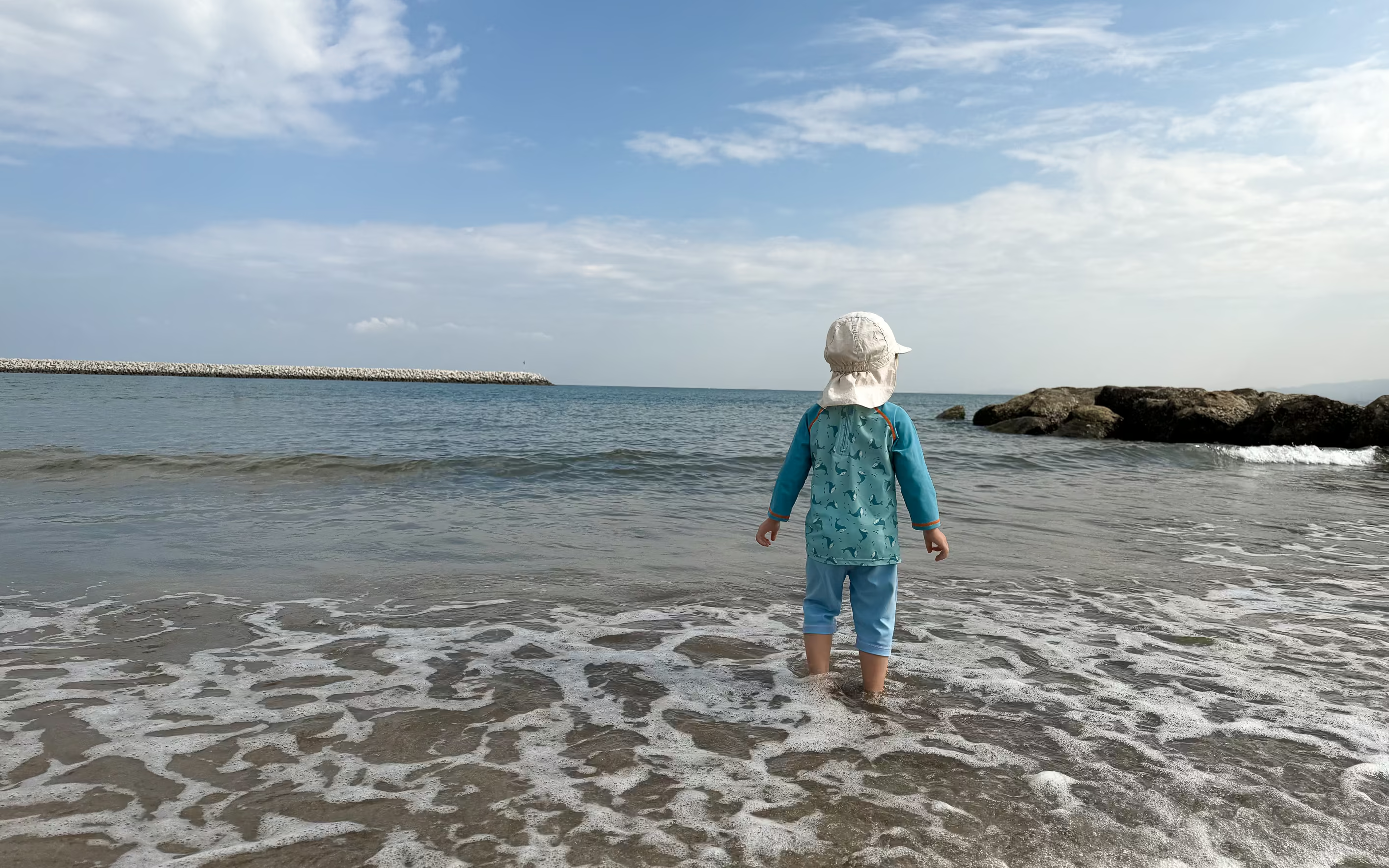
Still, it was hardly realistic to keep our daughter in the shade all day. When playing in the sea or at the beach, she was almost always exposed to the sun.
The same applied when we were out and about. Whether in the buggy or in the carrier, she was exposed to sunlight, even when we covered her with a light cloth.
For this reason, we applied sunscreen whenever it seemed necessary.
In the water, she also wore longer UV protective swimwear. One item we would not want to travel without anymore is her baby sunglasses.
At first, we were worried that she would not keep them on for long. However, just like us, she often found the light conditions too intense, so she happily wore them and even seemed to enjoy it.
The elastic strap ensured a secure and comfortable fit.
To reduce the risk of mosquito borne infections, we also used a mosquito repellent, either as a spray or lotion.
We purchased both products online before our trip. You can find the mosquito repellent we used here.
8. STROLLER OR BABY CARRIER IN OMAN
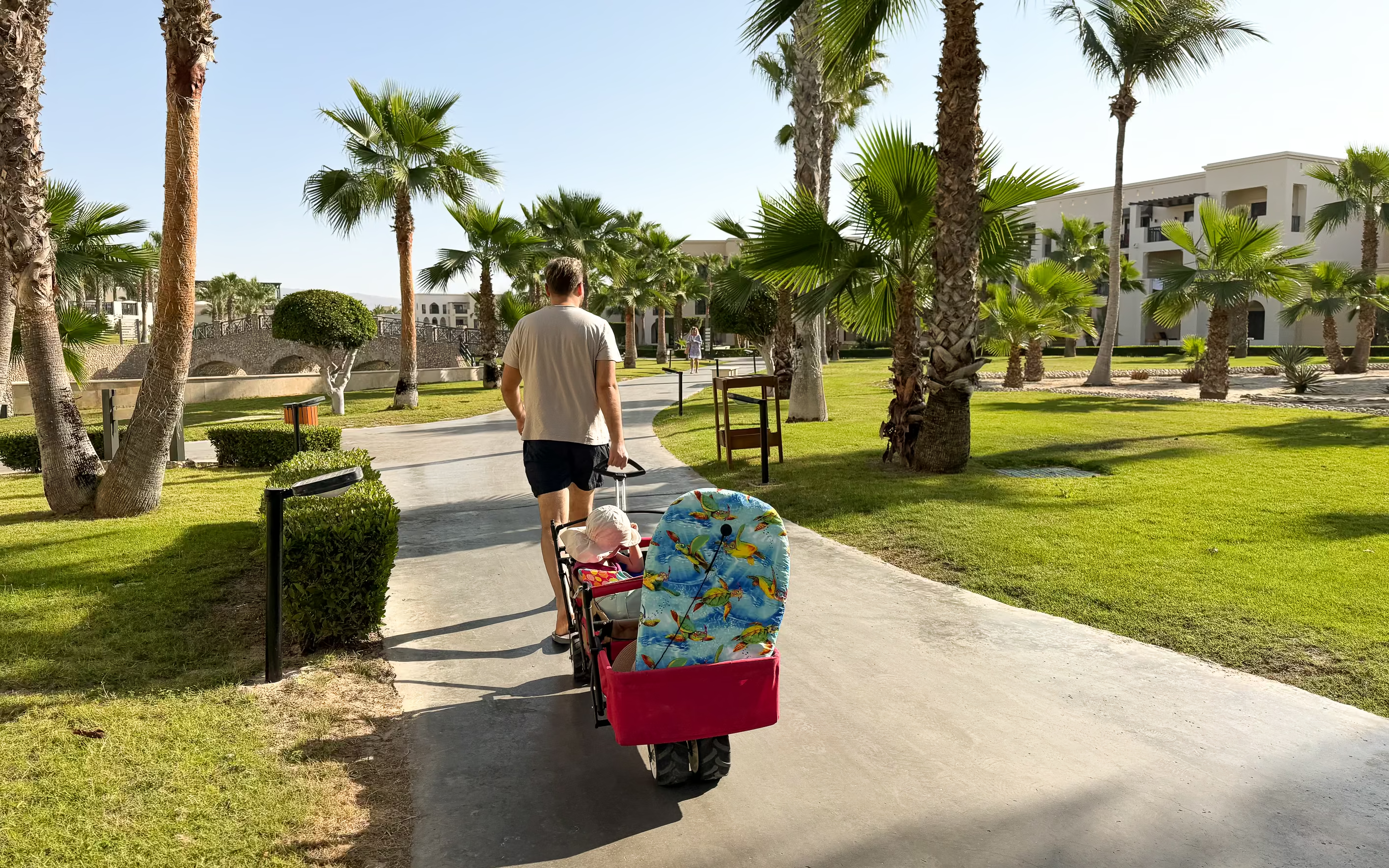
We travelled with both a lightweight, compact travel stroller and a baby carrier, and this combination worked perfectly for us.
We purchased the travel stroller specifically for our trips.
When choosing one, it was important to us that it offered all the features we considered essential, such as a fully reclining position, a sun canopy, and a spacious storage basket.
It also needed to be affordable, easy to handle, and above all lightweight. The Joie stroller met all of these requirements and proved to be a reliable companion while travelling.
Roads and pavements in Oman are very stroller friendly. We cannot recall a single place, apart from natural trails, where we were unable to use the stroller.
As most airlines allow up to two pieces of baby equipment to be checked in free of charge, we were able to take the stroller right up to the aircraft door without any issues.
Despite having the stroller, we also regularly used our Manduca baby carrier.
We relied on it especially when heading out into nature, for example to mountain wadis or beaches.
Whether you want to bring a carrier in addition to a stroller naturally depends on you and your child. You know best what works well for your little one.
For smaller babies in particular, a new environment with unfamiliar sounds and many new impressions can quickly become overwhelming.
Close physical contact provides a sense of security, and this is exactly where a baby carrier is ideal.
Our daughter felt comfortable and secure in it from birth. Whenever everything became too much, she could retreat and take a short nap.
As baby carriers are lightweight and compact, they take up very little space in your luggage. Another big advantage is that you have both hands free, which is extremely practical when travelling.

9. DRIVING AND CHILD CAR SEATS IN OMAN
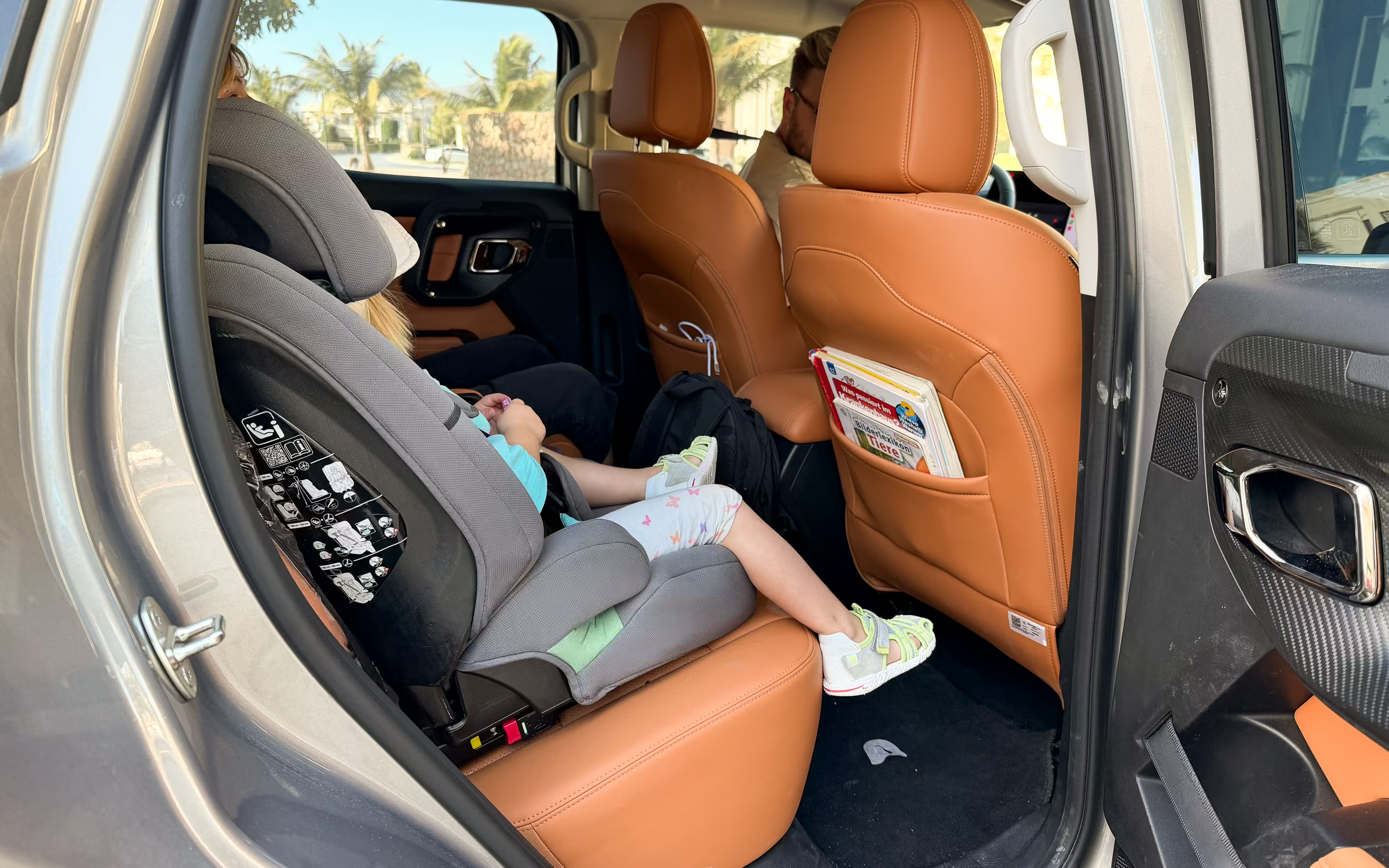
Driving with children in Oman is very similar to driving in Europe. Seat belts and child car seats are mandatory, and both regulations are strictly enforced.
Most car rental companies offer baby seats or child seats as an optional extra. The downside is that you never really know what condition or model you will receive.
In addition, child seats are usually charged per day, which can add up significantly on longer trips. For these reasons, we recommend bringing your own child seat from home.
Most airlines allow two pieces of baby equipment per child to be checked in free of charge, and a child car seat is included in this allowance.
This makes travelling more affordable and, more importantly, safer, as your child is secured in a familiar and well fitting seat.
Good to know: many, but not all, rental cars in Oman are equipped with ISOFIX. Make sure your child seat can also be installed using a standard three point seat belt.
Our rental car, which we booked via DiscoverCars, was brand new and equipped with ISOFIX.
If you plan to use taxis, you should assume that a child seat will almost certainly not be available.
The same applies to private airport transfers, transfers between accommodations, or organised tours.
It is therefore important to check in advance whether a child seat is provided or, to be on the safe side, bring your own.
You can find more detailed information about driving in Oman and choosing the right rental car in our in depth guide Driving in Oman: Car Rental Tips, Road Conditions & What to Know.
10. BEACHES IN OMAN
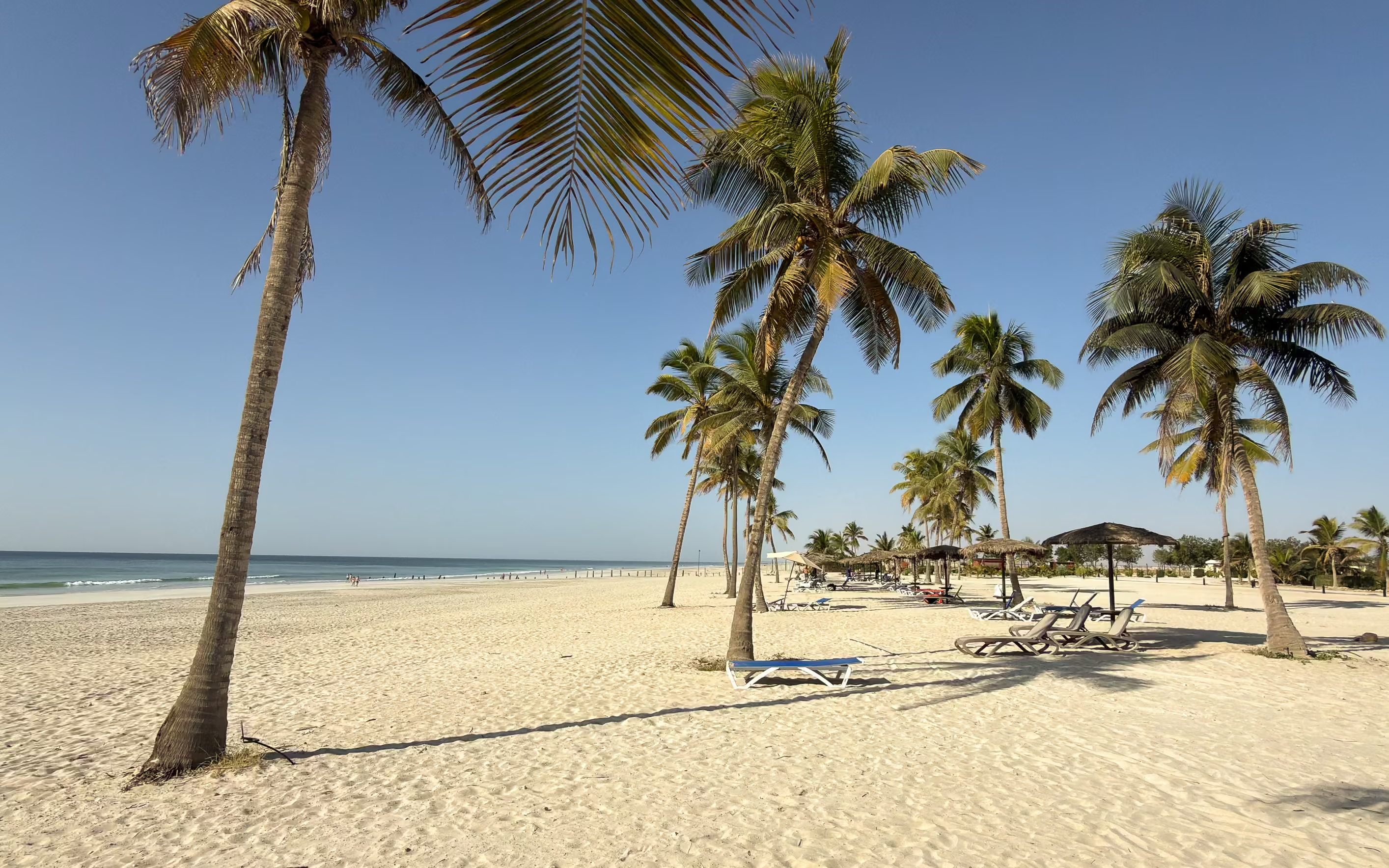
Oman’s beaches are a true paradise for beach lovers. Along the entire coastline, you will find numerous public beaches as well as private beach areas belonging to hotels.
The most popular public beaches are located around Muscat in the north and Salalah in the south.
Most beaches are natural, spacious, and clean. At some beaches closer to city centres, you will find small cafés, restaurants, or food trucks.
The further you move away from urban areas, the less infrastructure there is. This means no food options, no sun loungers or umbrellas, no toilets, and therefore no changing facilities.
To make sure you can still fully enjoy your beach days in Oman, it is worth keeping a few things in mind in advance:
- Bring sun protection or buy it locally:The sun is very intense all year round, so proper sun protection is essential. A lightweight pop up beach tent from home or a sun umbrella, which you can buy in supermarkets or at Decathlon in Muscat, provides reliable shade for at least part of the day and makes time at the beach much more comfortable.
- Do not forget your own towels:Many hotels do not allow their pool towels to be taken to public beaches, and apartments or holiday rentals are often not equipped with beach towels.
We brought lightweight microfibre towels from home, which are compact, quick drying, and perfect for the beach. - Pack enough snacks and drinks:Snacks and drinks are an essential part of any beach bag. Regardless of whether there are food options at your chosen beach or not, it is especially important when travelling with children to bring enough water, fresh fruit, and small snacks. In high temperatures, regular hydration is crucial, something that is easy to forget near the water, especially for young children.
Cultural note: Oman is an Islamic country, although it is very tolerant in many respects. Even so, it is recommended to choose respectful swimwear on public beaches.
On private hotel beaches, the atmosphere is usually more relaxed, and Western style swimwear is generally accepted.
PRIVATE HOTEL BEACHES
If you book a hotel with direct beach access, you can usually rely on full comfort.
Private hotel beaches typically offer sun loungers and umbrellas, towels are provided, and showers, toilets, and food options are usually available as well.
11. PLAYGROUNDS IN OMAN
Public outdoor playgrounds in Oman can mainly be found in larger cities and more tourist oriented areas. Particularly nice examples include the playground at the Qurum Natural Park and the one at Al Sahwa Public Park. We found the playgrounds to be very well maintained and clean.
Due to the heat, however, most activity takes place in the late afternoon or evening. Many Omani families actually arrive after sunset, when temperatures become much more pleasant.
The playgrounds are well lit, making it easy and safe for children to play even after dark.
For especially hot days, there are also several indoor playgrounds in larger cities, for example inside shopping malls.
These facilities are modern and well maintained as well, although an entrance fee usually applies.
That said, some of the most beautiful playgrounds in Oman are often right outside your front door or hotel door, the country’s impressive natural surroundings.
After all, what could be better for children than spending hours outdoors, walking or running on soft sand, building sandcastles, climbing rocks, or splashing around in the sea?


WAS THIS POST NOT ENOUGH FOR YOU? ARE YOU LOOKING FOR MORE TIPS, INSPIRATION, AND PLACES TO SEE FOR YOUR OMAN TRIP? THEN MAKE SURE TO CHECK OUT OUR FOLLOWING POSTS:
- Driving in Oman: Car Rental Tips, Road Conditions & What to Know
- Discover Muscat: Sights & Tips for Oman’s Capital
- Oman Road Trip Itinerary for Self Drivers
- Road Trip Through Northern Oman: Highlights Between Muscat, Coast, Wadis, Desert, and Mountains
USEFUL LINKS & RECOMMENDED TRAVEL GUIDES FOR YOU
- Discover the best accommodations
- Find affordable flights at skyscanner.com
- Find affordable rental cars at DiscoverCars
- The best Travel Guides for Oman
- Unique Excursions to Experience in Oman
Note: This blog post contains our personal recommendations in the form of so-called affiliate links. If you book or purchase something through these links, we earn a small commission. There is absolutely no change to the price for you.
Table of contents
Our Travel Destinations


Newsletter
Subscribe to our newsletter
Vielen Dank! Sie haben sich erfolgreich für unsere Updates angemeldet!
Oops! Etwas ist beim Absenden des Formulars schief gelaufen.
If you have any questions or additions to this blog post, feel free to send us a message.
Vielen Dank! Ihre Nachricht wurde erfolgreich gesendet, und wir werden Ihnen bald antworten!
Oops! Etwas ist beim Absenden des Formulars schief gelaufen.